written by Nicolas Gaubens–Mistchouk
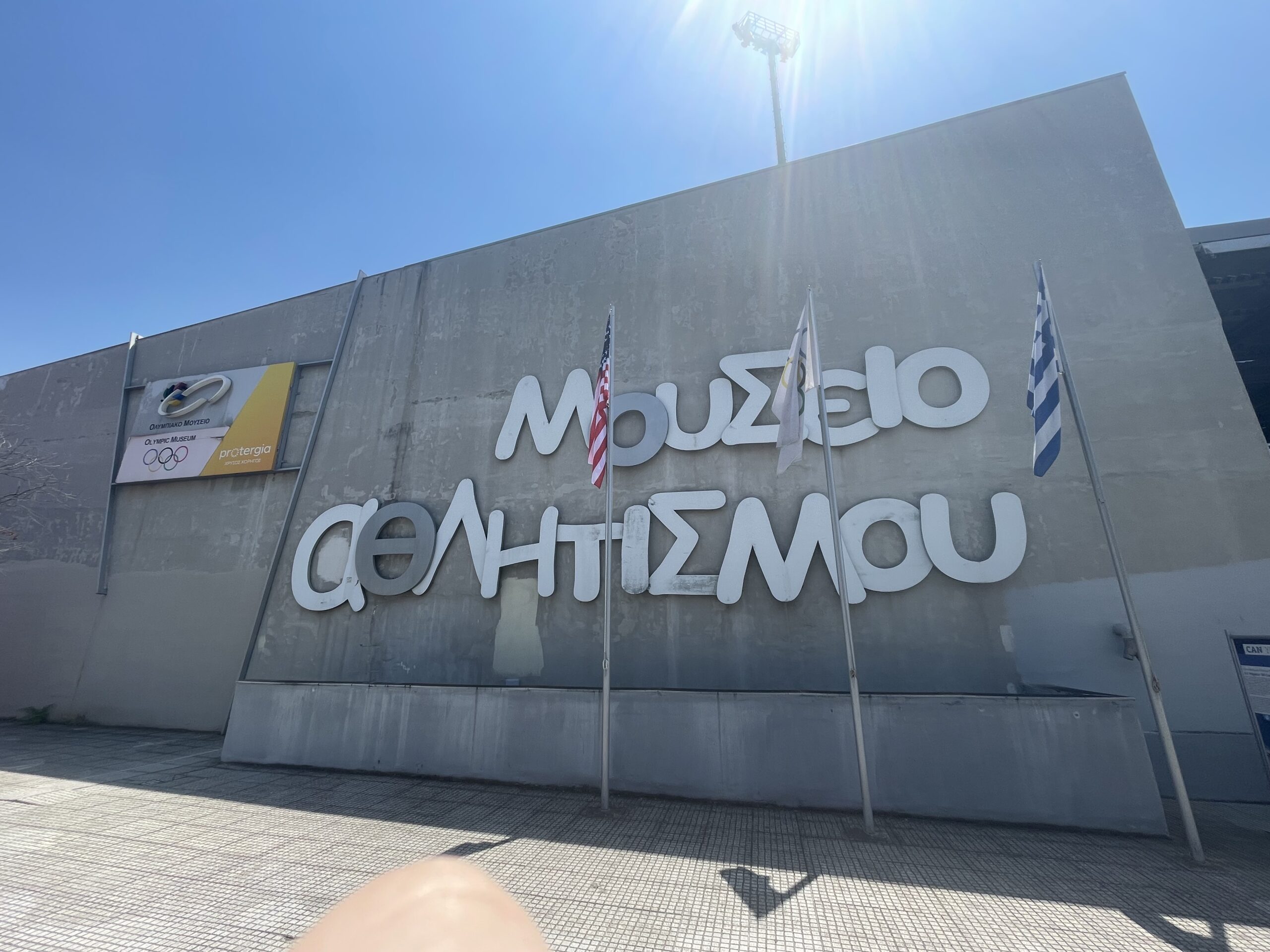
After watching a Goalball match, I continued my journey of sporting and cultural discovery in Thessaloniki, this time focusing on the Olympic Games Museum.
It traces the history of both the ancient Greek games and the modern Olympic Games, including the Winter Games and the Paralympic Games. I highly recommend this museum, where you can find lots of jerseys, posters, and artefacts from every Olympic edition, as well as learn anecdotes and information about each era of the Games.
Originally, the Olympic Games were born in Greece in the 8th century BC and continued until the 4th century AD, lasting for about 12 centuries. They took place every four years in the city of Olympia, holding significant sporting, political, and religious importance. These Games were organized in honor of Zeus, the chief god of Greek mythology. Instead of being a unified country, Greece at the time consisted of rival city-states that were perpetually at war. The Games therefore allowed these rival Greek cities to unite around a shared event, fostering a temporary sense of unity and common identity.
Only free men could participate, and athletes represented both their home city and their family. The sporting events focused on physical skills considered essential at the time, such as running, throwing, fighting, and horse riding. At the end of the Games, winners were crowned with an olive wreath, bringing glory and pride to their families and hometowns.
A unique feature of these Games was the Olympic truce. This meant that during the period of the Games, all wars across Greece had to stop so that athletes could travel to Olympia safely. For a temporary period, this represented a powerful symbol of unity among all Greeks.
Then, for more than 15 centuries, the Olympic Games disappeared. It was Pierre de Coubertin, a French historian, who championed the revival of the ancient Greek Olympic Games, but in a more modern form: on an international scale, at the end of the 19th century. In addition to promoting sport in general and encouraging physical activity, the Olympic Games aimed to foster world peace through international cooperation and sporting competition that united athletes of all nationalities. Indeed, for Pierre de Coubertin, the Olympic Games were primarily a competition between athletes, not between nations. To draw a connection between the ancient Games and the modern editions, the first winner of the marathon, athletics’ original event, was none other than a Greek man, Spyridon Louis.
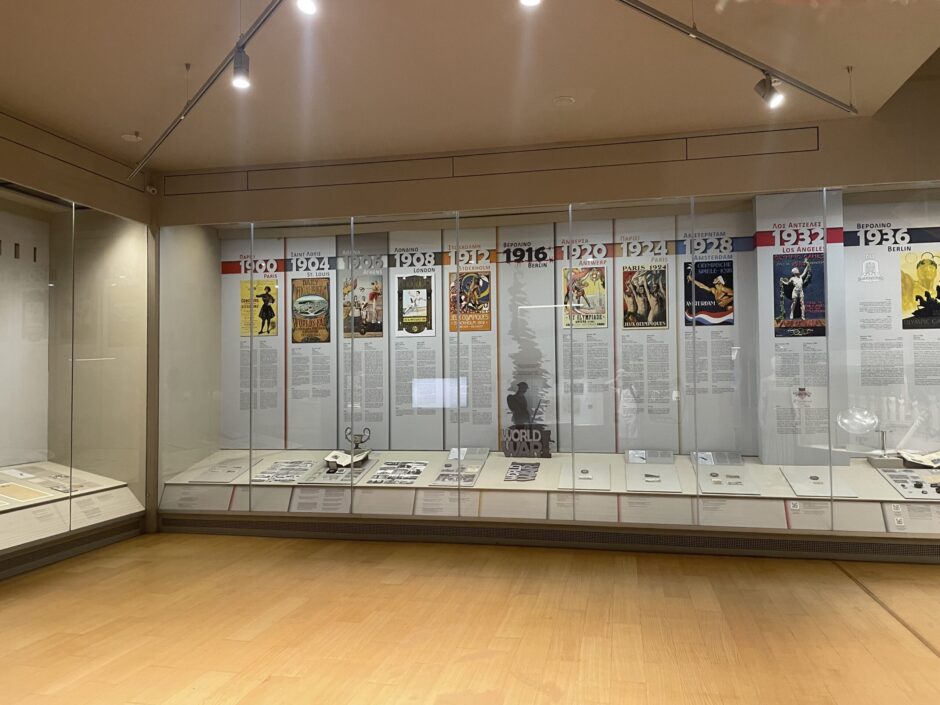
However, over the course of different editions, the Olympic Games introduced new concepts, features, and principles that set them apart from the ancient Games. The first Games in Athens in 1896 bear little resemblance to today’s Games or to the Paris edition. For example, the Olympic flame was introduced in 1936 at the Berlin Games, the three-medal podium (gold, silver, bronze) appeared starting with the third edition in 1904, and the Olympic Village came into existence in 1932.
Women first competed in 1900 but full gender parity was only achieved at the 2024 Paris Games. This shift toward progressive inclusion can also lead to the creation of the Paralympic Games and the Winter Games. The Paralympics were first held in 1960 in Rome, an idea that emerged after the Second World War to help rehabilitate wounded soldiers. The Winter Games were first held in 1924, in the same year as the Summer Olympics, before being held two years apart from the Summer Games starting in 1994.
Finally, as a political science student, my favorite part of the museum was the connection between the modern Olympic Games and politics, including geopolitics.
On the political side, one of the most significant moments was Jesse Owens’ defiance of Adolf Hitler. Jesse Owens was a Black American athlete who dominated the track and field events at the 1936 Berlin Games, where he excelled. Hitler wanted to use the Olympics to promote his Nazi ideology of Aryan supremacy. But this ideology was shattered when Owens won four golden medals, defeating German Athlete Luz Long, who famously became his friend.
On the geopolitical side, a particularly telling moment of tension was the successive hosting of the Olympic Games by the United States and the USSR. Moscow hosted the Games in 1980, followed by Los Angeles in 1984. This period was deeply rooted in the Cold War between Americans and Soviets. As a result, the sporting arena became a battlefield for soft power. The United States boycotted Moscow first, in 1980, and the USSR then boycotted Los Angeles in return, in 1984.
What strikes me most as I leave this museum is just how much the Olympic Games have always been far more than a simple sporting competition. Whether through the Olympic truce in ancient times, Jesse Owens’ courage in the face of Nazi ideology, or the tensions of the Cold War, sport seems to act as a mirror of its era, capable of revealing both political tensions and moments of unity between peoples. This adds another layer of meaning to every Olympic Games we watch today: behind every medal, a bit of world history is also playing out.

