Written by Viola Ventura
Migration flows have risen in the last 20 years, with an even more relevant increase after 2016, with the closing of the borders between Greece and North Macedonia.
Naomi is an organization that will soon celebrate 10 years of activities. I have recently had the opportunity to speak with Gabriella, one of the workers involved in Naomi since its birth. Starting from humanitarian aid in the village of Eidomeni (Ειδομένη ), symbol of the Balkan route, where Naomi was operating a solidarity kitchen supporting the ones trying to cross the border. As they work with people from diverse religions, here it is very important to combine different cultures and religions, creating an inclusive and diverse environment; even if Naomi started with support from the evangelical church, they focus on creating an inter-religious community as a central value.
After some years of activities they realized that not only humanitarian support was crucial, but also there was a need for supporting integration at the professional and bureaucratic level.
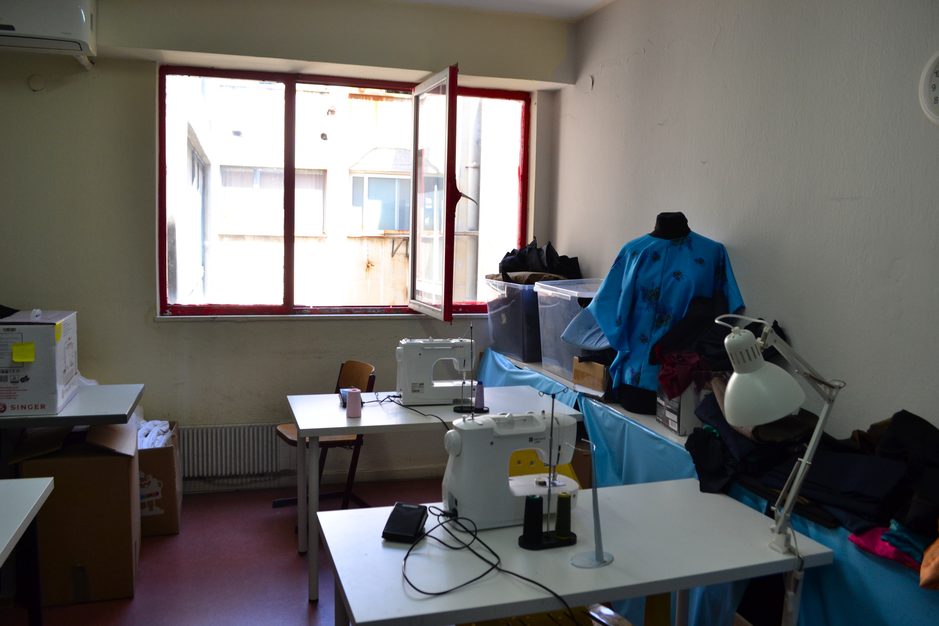
From 2019 Naomi started to professionalize some of the activities, such as sewing and textile academy, rooted in informal groups and activities present from before.
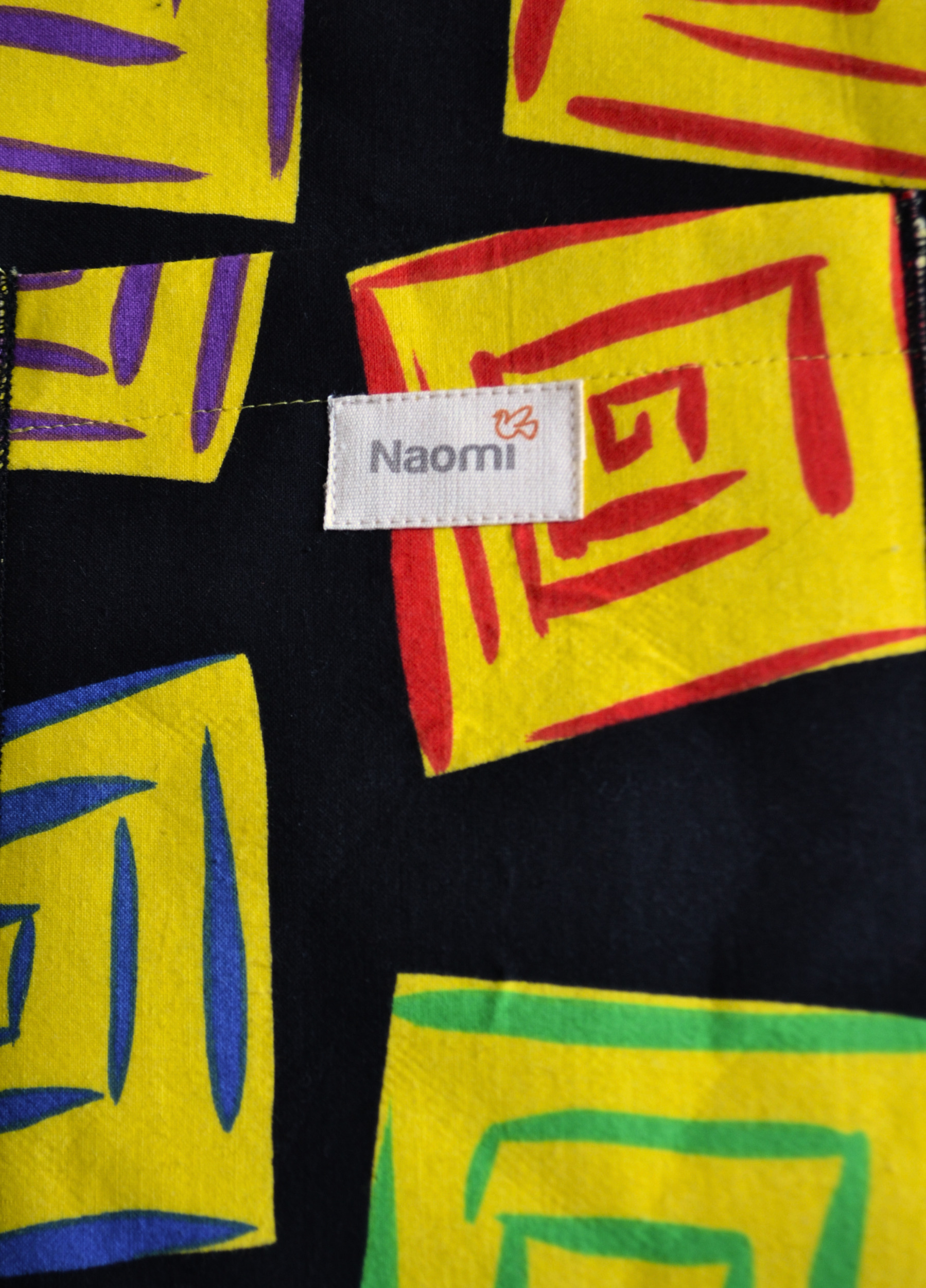
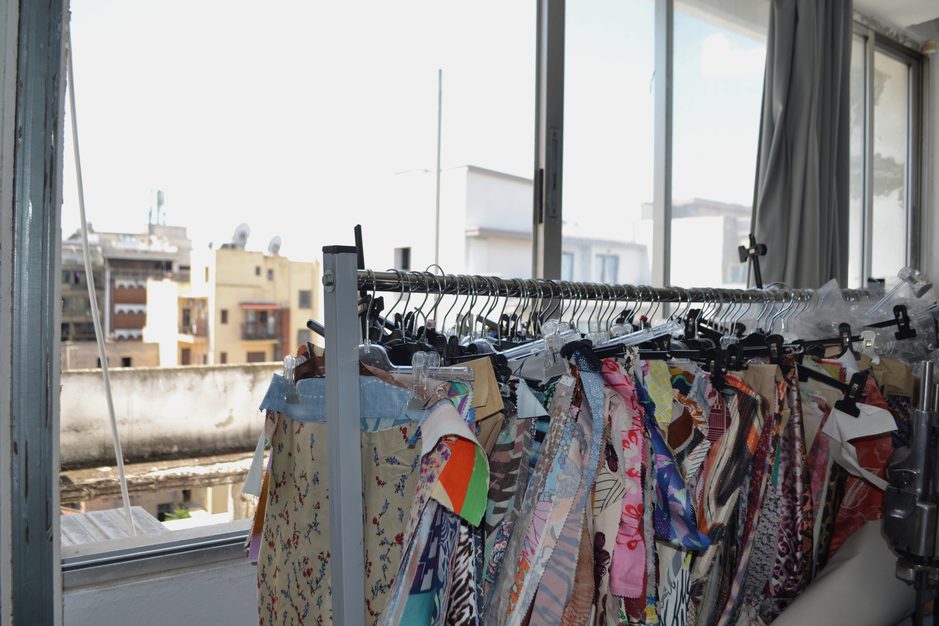
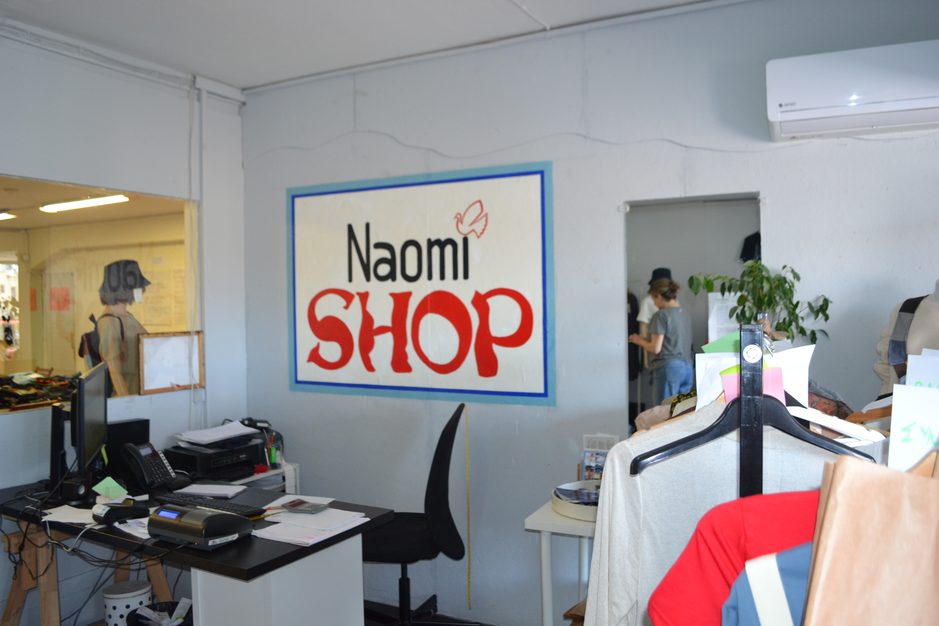
Professional seamstresses would come to the organization to teach refugees relevant skills which they could apply in searching for employment. The textile academy and the production unit are active now and also running a small shop, utilizing only recycled materials, such as denim, bicycles tubes, banners or deadstock fabrics, while privileging natural textiles as natural cotton. Symbols of their desire to combine humanitarian aid and a more broad integration approach are some accessories made from the blankets used in the previous years of their activities, while working at the border to North Macedonia.
Most of the individuals reaching out to the organization are women, even if also men participate in the activities. Right now the focus is socio economic integration, through training, career counseling and skill development activities. Especially for women, teaching soft skills is a key to access the labor market, because they learn to express their needs and to stand for themselves in a possibly hostile environment. The space of the training becomes a context for the creation of collectivity, discussing their lives and the obstacles that they encounter in their daily lives, sharing the challenges they are facing and connecting with others.
There are also programs targeting women who cannot be in employment: single mothers, victims of trafficking or having special needs and health problems; they are supported by a mentor and trained in zero waste production. Afterwards, products are sold and the women receive economic support according to the sales, not through formal employment, through humanitarian support funding.
There are also programs of humanitarian aid for refugees in the camps nearby the city, with medical access and development of utility spaces, like common kitchens. But even when refugee status is obtained, life does not get any easier; once out of the camps, asylum seekers are left alone to find housing and employment for themselves. Housing and access to greek language courses are the most problematic aspects: without speaking greek, managing bureaucratic procedures becomes almost impossible, and there are no bridge programs between asylum seeking and refugee status. Naomi tries to create these bridges by providing some form of social services for individuals outside other public or humanitarian programs. For example, while trying to prepare people for work, they provide support in creating a bank account, or referring people to housing programmes, as the small compensation they get does not allow them to give rent deposit. Access to healthcare is equally difficult, in most cases neither doctors nor the refugees speak English, and translators from the original languages emerge as crucial figures.
Finally, a further barrier to integration relates to the fact that many refugees don’t aspire to stay; Greece for them this is a step of a longer journey, as they are trying to reach northern Europe, often Germany, where many of them have family and wait to be reunited. But this is not always successful, and in some cases Germany even sends back migrants to Greece.
This kind of dynamic is difficult to tackle for humanitarian organizations and associations, the documentary “The Milky Way” (2020) by Luigi d’Alife shows this perfectly, despite in another context. The French Route, through the Alps from Claviere (IT) to Montgenèvre (FR), has been walked by countless people and is nowadays one of the main paths of refugees across Italy. Us, (mostly) white people carrying European passports, enjoy the privilege of crossing borders without worrying, but this is not a reality for most, and has not been until pretty recent times. In the ‘50, it was Italians who were attempting to cross the mountains by foot, looking for a better life in France and Belgium, with many losing their lives in the process.
This to remind the relevance of solidarity, which has to come first when encountering people looking for a better life, but often are greeted with discrimination, repression and violence. The organizations that are active in supporting refugees and in borders are trying to give a sort of relief to these individuals, bringing on a message that is about humanity, the awareness of the shared experience of fear, and the desire to escape poverty, war or religious oppression.

