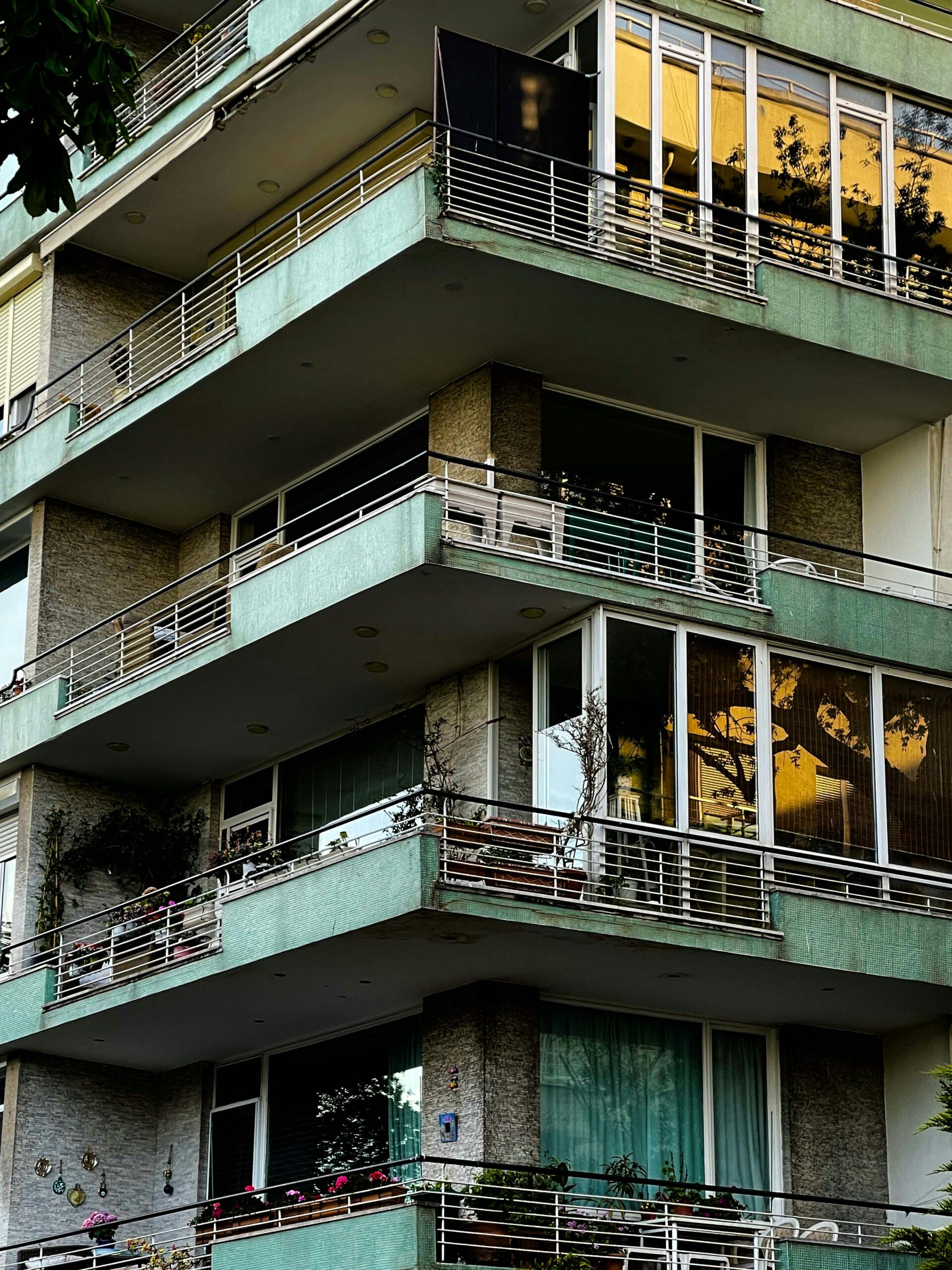
One thing that defines the urban landscape of modern Thessaloniki is the “πολυκατοικίες” , those massive apartment buildings that shape the city center. When I first moved to Thessaloniki as a student, I wondered what it was like to live in them. What kind of relationships do neighbors maintain? One thing is for certain. In big cities, you get lost. You don’t know who lives next door. We have become suspicious, afraid to open up our homes and who can blame us?
However, when you realize the absence of community and collectivity, there is a high chance that the sense of loneliness will intensify. When I understood that we are strangers within four large walls, separated by even smaller ones, I tried to figure out where this stems from. Surely there are many “right” answers, but I’m not sure I was looking for those as much as I was looking for a way to romanticize the reality of the big city. Many who live in metropolitan areas probably want to “escape” to the countryside, unable to bear the city’s hustle and bustle, the fast pace, and above all, the impersonal relationships. Yet, I often catch myself observing these buildings. I am deeply intrigued by the idea that on every floor, in every apartment, a different reality is unfolding. This is something you can glimpse through the small or large windows of these homes.
I remember walking down Navarinou Square, and right at the end of it, I saw an iconic apartment building with large corner windows. The strange thing was that not all the apartments had curtains. Even if they did, the light allowed you to notice shadows, different aesthetics, and different lives. I saw a couple cooking amidst steam and laughter, a mother patiently feeding her little one and an old lady looking out of the window. All of this was happening simultaneously, in parallel. Every floor is a different world, and every apartment a different reality.
We often say that we get lost in big cities, that we are strangers in our own buildings. And yet, there is a strange community being built through sound. It’s the sound of bouzouki, a traditional greek instrument, echoing from a rooftop somewhere near Aristotelous Square. You don’t know where it’s coming from, but it makes you smile. It’s the street noise blending with a baby’s cry or the music played by the neighbor upstairs. These relationships aren’t necessarily “impersonal” they are simply different. We might not know the name of the person living next door, but we share the same air, the same view, and, in a strange way, the same loneliness.
I find a certain beauty in that.
However, there is a subtle irony in romanticizing this “concrete jungle.” These buildings weren’t designed for human connection or aesthetics. They were products of a specific political and economic agenda that prioritized rapid development over quality of life. This urban structure enforces a quiet class hierarchy. The higher you go, the more light and “status” you can afford, leaving the lower floors in the shadows. It’s a system that often sacrifices public space for private profit, turning the city into a collection of isolated cells. Perhaps romanticizing the lives behind these windows is my way of resisting the harsh, systemic reality of the city.
There is a bittersweet charm in this “romantic” alienation. Τhe fact that we are so close together, yet so utterly alone. While sociology tends to view this as a problem, my perspective transforms it into a unique form of art, discovering freedom within anonymity. In the end, the city allows you to be yourself precisely because no one is watching you closely there, the four walls cease to be mere boundaries and become sanctuaries. Within these buildings, parallel universes breathe. It is profound to consider that on the third floor, a birth might be celebrated, while directly above, on the fourth, others are immersed in mourning. This density of emotions, packed into so few square meters, is what lends urban life its breathtaking intensity.
I discovered that there is a specific word describing this way of observing: “Sonder.” According to the dictionary, Sonder is the realization that each random passerby is living a life as vivid and complex as our own, in which they are the central character and we are merely a background extra.
To come to an end, if you remember one thing from this post, let it be this. The moment you start feeling the loneliness of the city, feeling that you are surrounded by strangers, take a look around and more specifically, look up. Observe those buildings and how their balconies are decorated. Who knows? You might just see a reflection of yourself in one of them.

