Written by Nicolas Gaubens–Mistchouk
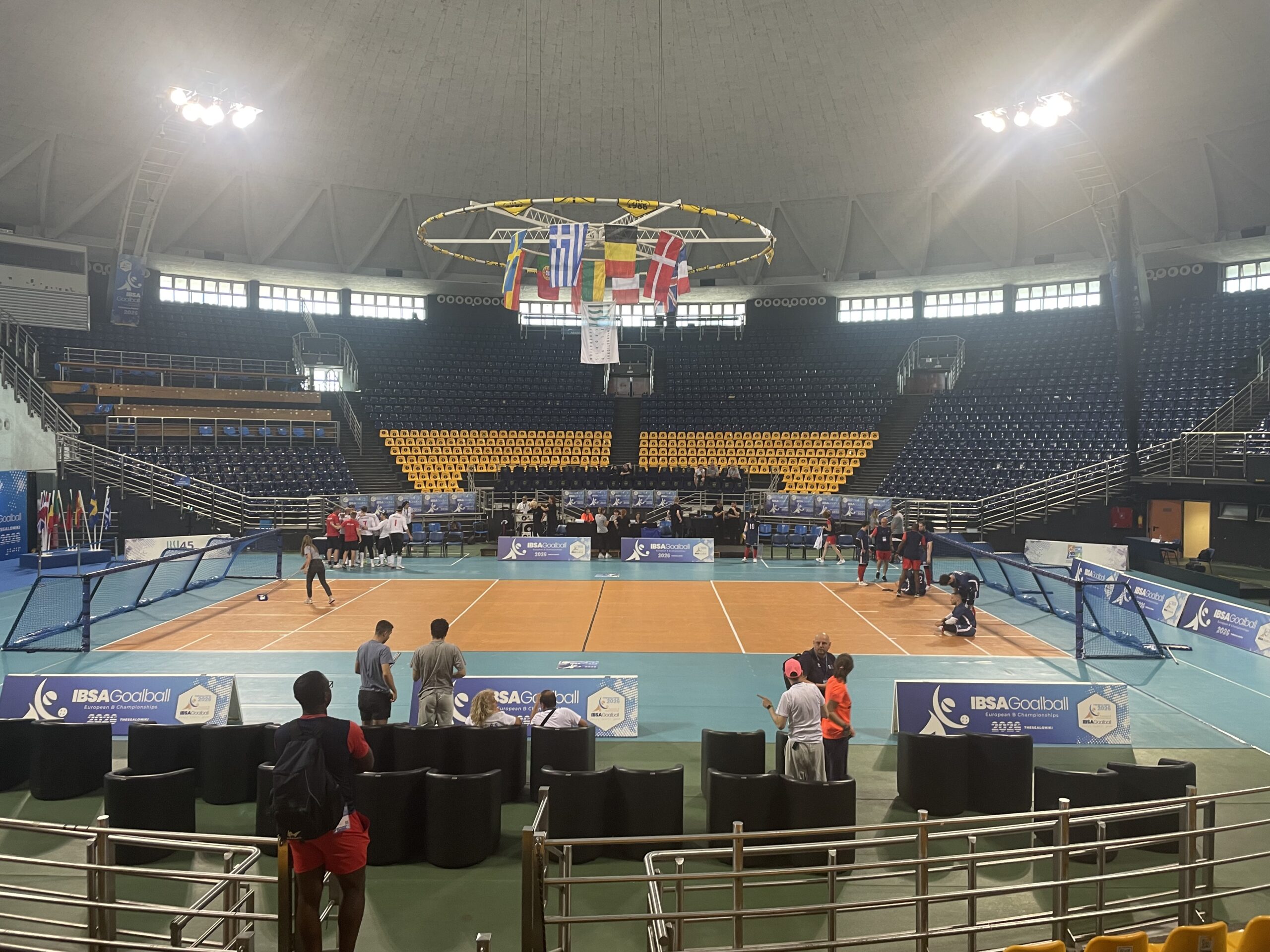
At the end of June, I saw a Goalball match in Thessaloniki during the Goalball European B Championships 2026, and it was my first experience of a para sport. Before that, I did not know it existed and this category of sport was for me totally unknown. It was a nice discovery, I enjoyed watching the game, and being immersed in the atmosphere of this sport.
Initially, this sport was invented in 1946 to re-educate the soldiers of the Second World War who became blind or visually impaired. Step by step, this activity became an internationally recognized sport and was even integrated into the Paralympic Games in 1976, which confirmed its status as an international sport. Today, it is one of the major sports of the Paralympic Games and has diverse international competitions, like the World Championships and European Championships.
So, what is Goalball? Two teams of three players in a field that is the size of a volleyball court compete against each other. Players roll or bounce the ball to score goals in the opponent’s net. Obviously, the team that scored the most, wins the match.
The particularity of this sport is that players do not see anything, because they are partially or completely blind, and because they wear masks during the match. Therefore, players can rely only on the noise to stop the shots and to score in the opponent’s net. For this reason, silence is a golden rule and mandatory for the public during the game so that players can hear the ball. Also, the ball contains bells that allow players to locate it through sound and to feel where the ball is and to adjust their play.
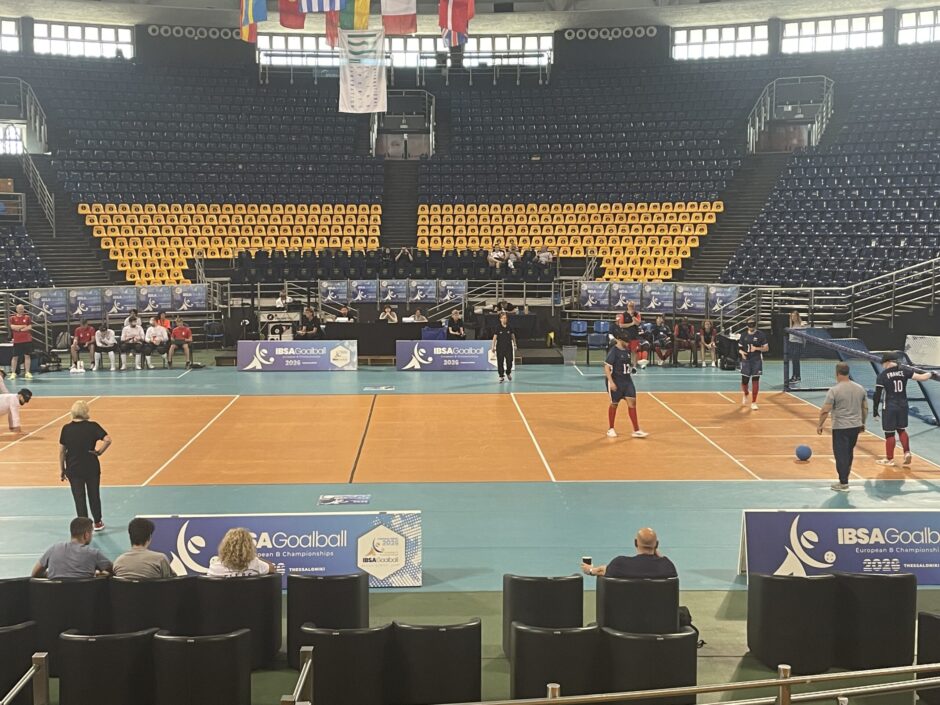
The atmosphere is therefore totally different from other sports, where, by contrast, public noise is encouraged. One of the particularities that stood out to me is also the contrast between the public and the players. Players can talk, make noise but the public cannot. For example, when players score, the public knows because they have the capacity to see, but not the players. They must wait a few seconds for the referee’s confirmation of the goal before reacting. So, the first time I saw a goal in the stadium I was happy and even shouted a little, but I was the only one to celebrate immediately and the celebrations of the players came after.
When I arrived at the match, I asked myself “how players manage to play, stop and shoot balls without ever seeing ?”. I was impressed by the capacity of adaptation of the players. They moved with so much ease, aimed with precision and had really good reflexes and a strong capacity of coordination. Their technical mastery of the sport is so high that we quickly forgot their visual impairment to be focused on their sport skills.
In terms of game strategy, players do not rely only on the power of shots. Collective tactics and feints exist, and they ask for important coordination between players. For example, a player can simulate a throw by strongly hitting the floor with his foot, while another player on the other side shoots in order to deceive the opponents about the direction of the ball.
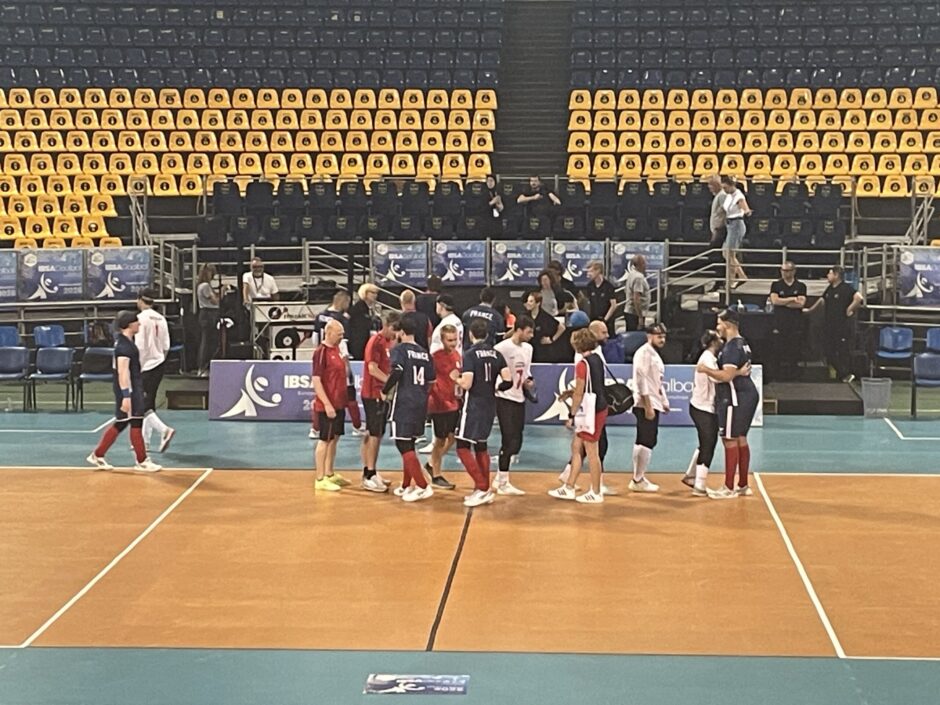
As I said at the beginning of the article, I did not know this sport, and I never watched the Paralympic Games. But I got involved quickly in the match. I am French and the match I attended during the European championships was France against Belgium. Even if France lost 5 to 9, I wanted France to win just as much as in any other sport. I held my breath before each shot. Each time France scored, I was sincerely happy and when they conceded, I was sad and frustrated.
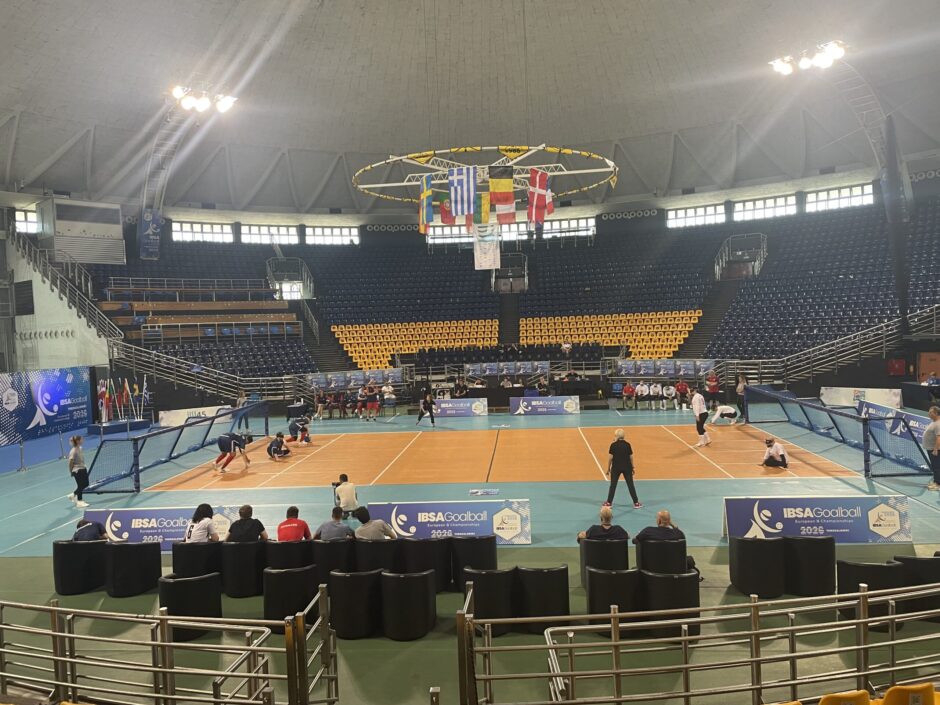
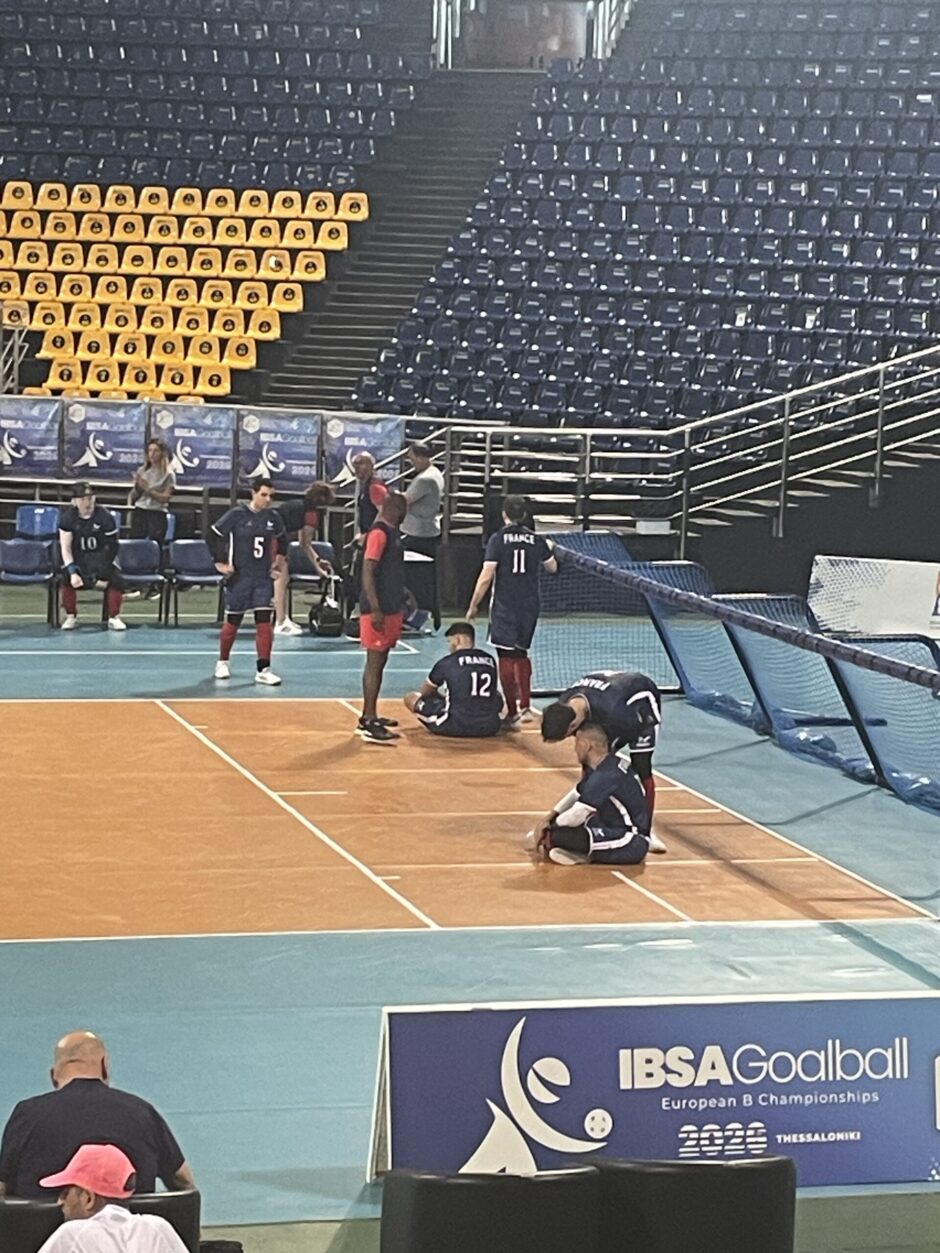
This match challenged preconceived ideas that I had about para sports and disabled athletes. My experience showed me that whether it is a para sport or not, Goalball proves that it is a high-level sport. It gives the same emotions as any other sport, especially when it is your country that is playing. Once the first minutes passed, the spectators simply appreciate the sporting spectacle and nothing else.

