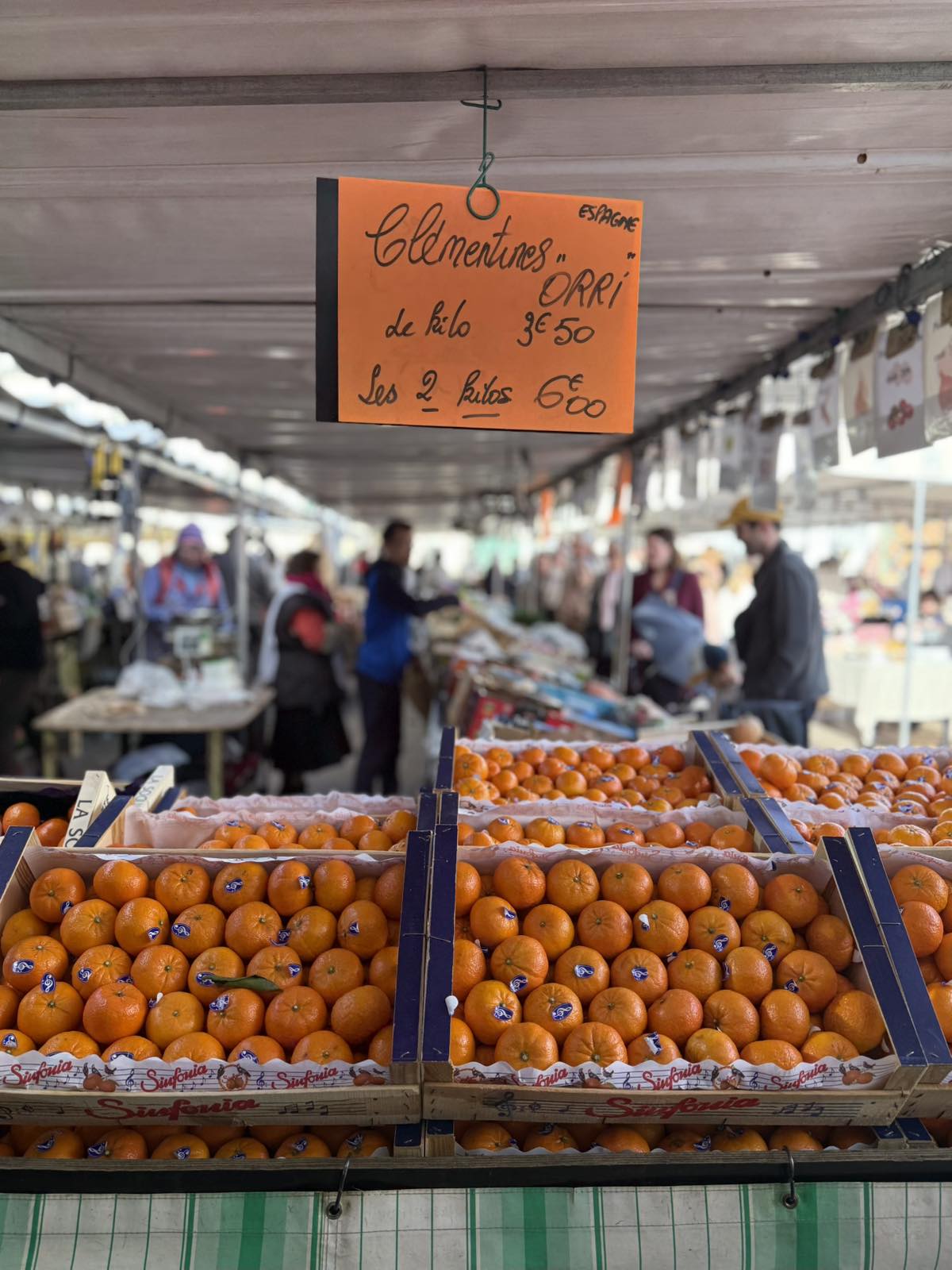
As a big fan of open-air markets, I like to do a small exploration of the local equivalents whenever I travel to other countries. I enjoy seeing the vegetables and fruits available by season, the variety of each region, the different colors, the people behind the stalls, and even the locals shopping. I also find the prices interesting, which in most cases are not very different from the ones we are used to in Greece.
All of this somehow helps me see and understand the city from the residents’ point of view. What I have noticed in most European cities I have visited is that in Germany and in France, we find similar prices. So this time as well, I took the opportunity when I went to France, and more specifically to Fontainebleau. It is about an hour away from Paris, located on the southern side of the city. It is a very beautiful and picturesque town; it makes you want to remember everything you see and not miss even half a moment.
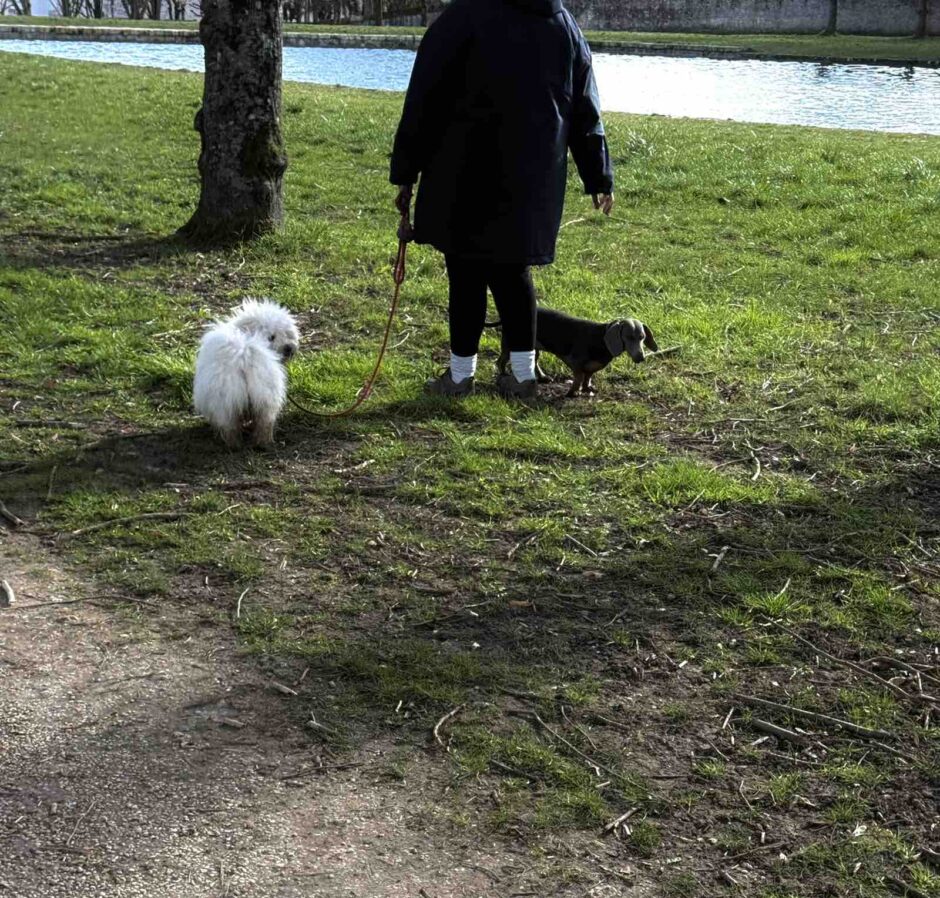
Its people are quite active. I met many people outside, but mainly at the Palace, which used to be Napoleon’s countryside residence, running alone or in groups, taking walks, and walking their dogs. They are also polite and cheerful; people there smile at you and greet you on the street, even if they do not know you. This might seem a little strange at first, but you get used to it very quickly, and you might even start to like it, which makes Fontainebleau feel even more welcoming.
As for their open-air market, just like in Greece, the people there are quite expressive. They talk to each other, greet one another, hug, move quickly, happily say “Bonjour” to you, and can also be quite loud. After all, many people go to the market to socialize, and especially for older people, one could say that it is perhaps also one of their outings. The truth is that it is very interesting to observe the people who move around in a market. They are all so different from one another, yet they find something in all this that potentially makes it even more lively than it already is.
They could easily go to the supermarket and, along with the rest of their shopping, buy their vegetables there as well. But possibly the fact that you essentially have a person “a producer” to trust and support gives you a very pleasant feeling. Mutual support is very important in times like these, and people increasingly seem to have the need for simple daily social interaction. To have built a relationship of trust with someone you see once a week and trust enough to refer to them as “my tomato seller” or “my egg seller.”
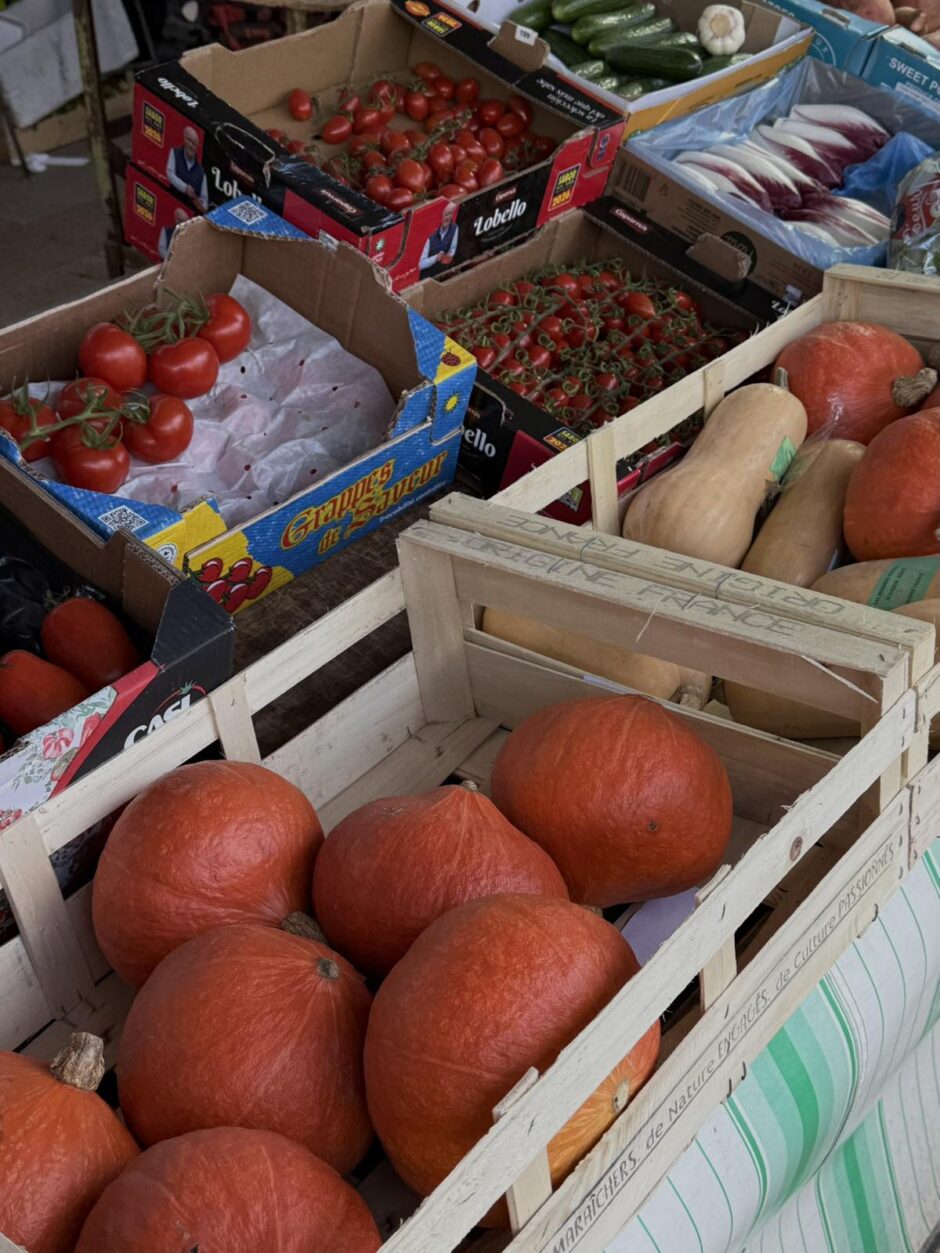
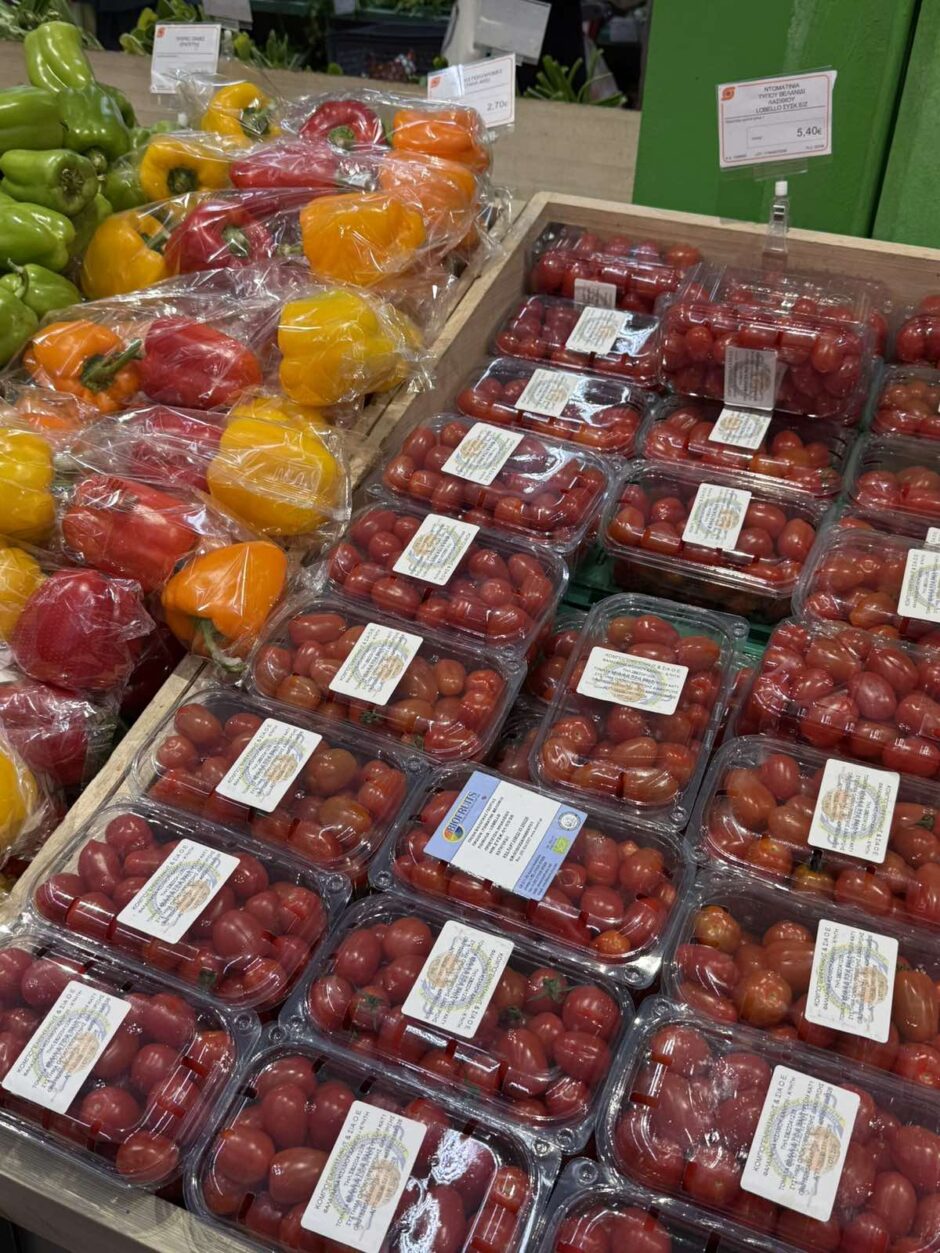
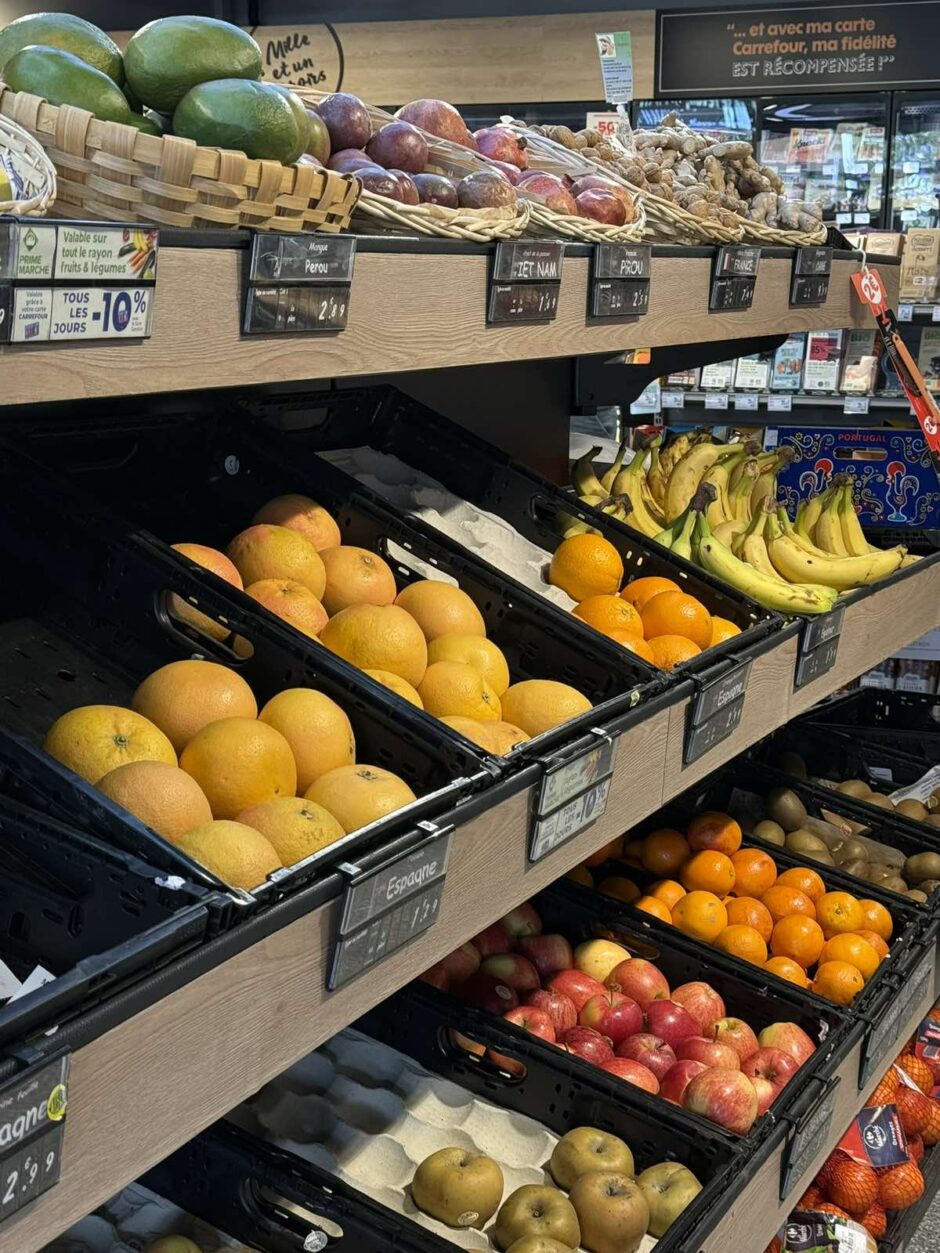
As for the prices, one might expect them to be higher in the fruit and vegetable sections of supermarkets as well as in the open-air markets, but the truth is that the prices are similar, and in some cases, Greece may even be more expensive. For example, cherry tomatoes in our market are sold in a small container (950 g) for €5 and in the supermarket for €5.40, whereas in the Fontainebleau market, I saw them priced at €4.50 and in their supermarket at €4.95. On the other hand, apples in our market can be found for €1 per kilo, while in the supermarket they are priced at €2.18. In Fontainebleau, apples cost €3.90 at the market, while in the supermarket you can find them for €2.99.
Of course, when it comes to prices, it certainly matters where each city is geographically located, what it cultivates, and which country it borders. It also plays a major role where they source their raw materials from, as well as where local products from each region are sent. As for the market itself, the time you go to do your shopping plays a key role in the fluctuation of prices, so does the weather, the demand on that particular day, the day the market takes place, and even the neighborhood where it is held. For example, Saturdays tend to be the busiest and most expensive days in open-air markets, and therefore prices are usually higher.
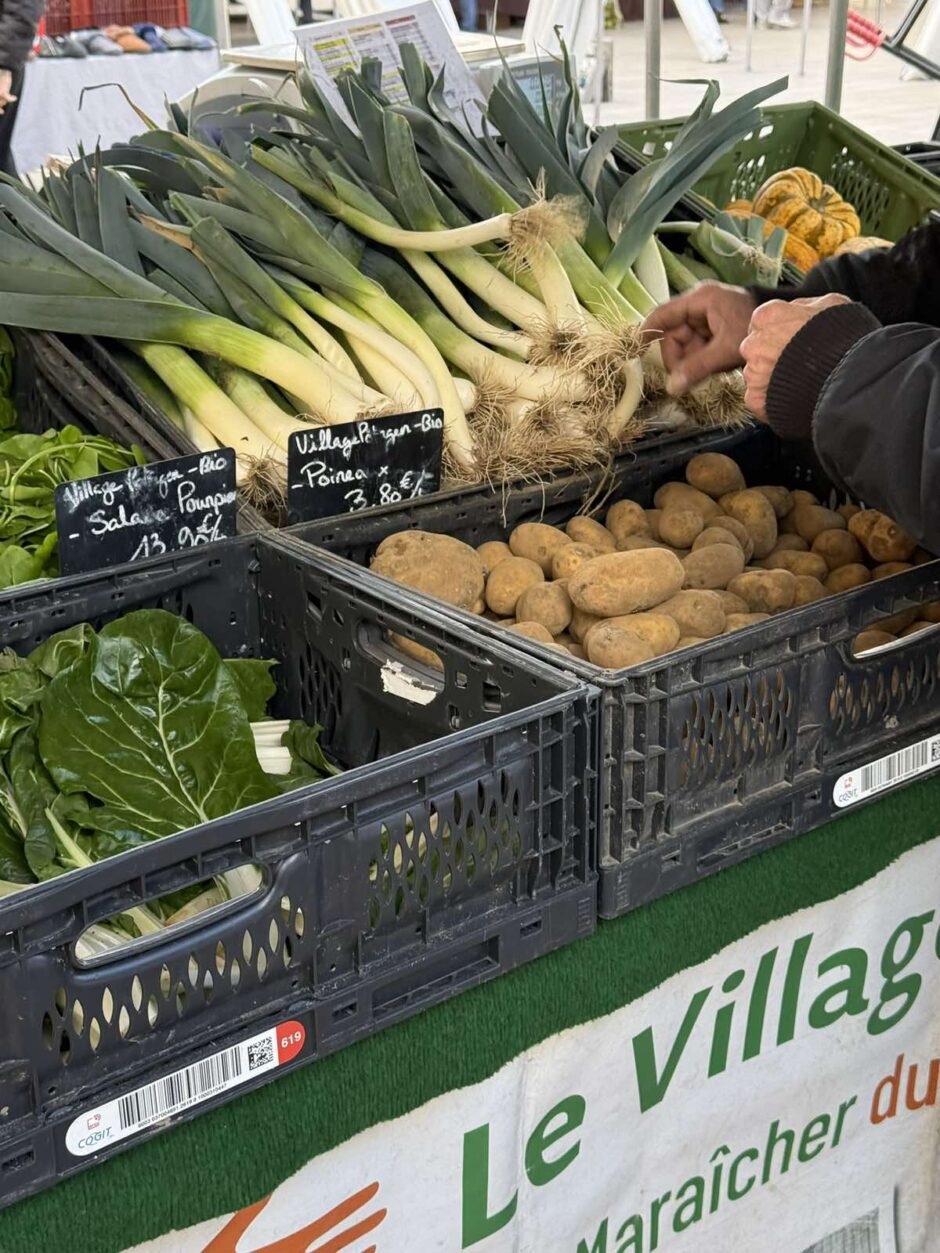
From the above, one can observe that there are many similarities but certainly also differences between the cultures of these countries. One very important difference is that in most supermarkets, whichever of the two countries you go to, you will notice a more intense use of microplastics. This does not only apply to bags (although some supermarkets give the option of using paper bags), but also to the packaging of fruits. Fruits are often wrapped individually—such as cucumbers or broccoli—and apples may even be surrounded by protective packaging so they do not get bruised and can be sold to consumers looking flawless.
In reality, no one has written a specific rule about how open-air markets should function, and yet we see that two very different countries, with quite different standards of living and cultures, share a fairly similar mindset in the way these markets operate. In different parts of the world, people seem to seek interaction with one another in very similar ways.