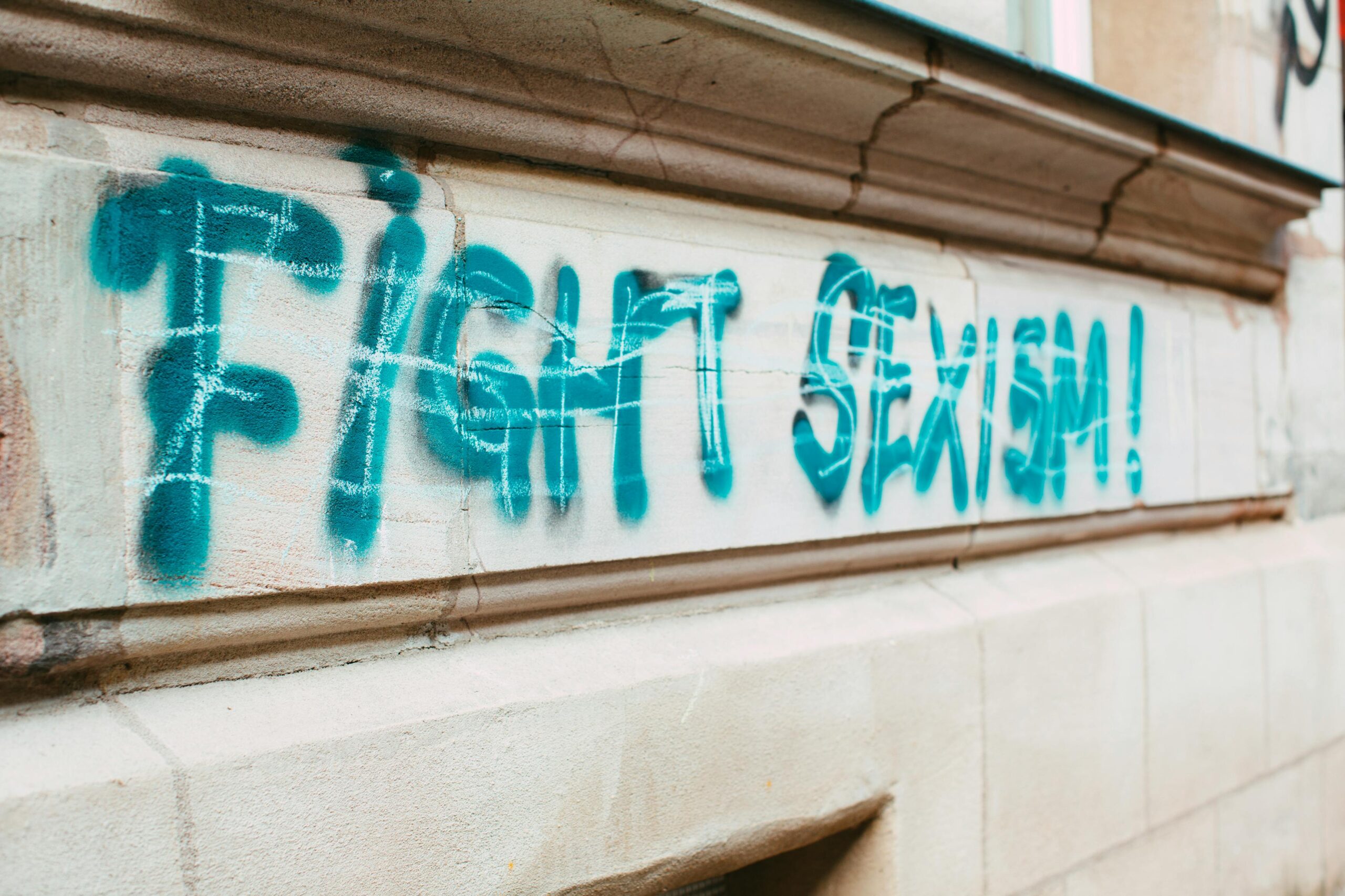
The society we live in is deeply shaped by the patriarchy where the dominating role of men leads to prominent gender inequalities. If these disparities are reinforced with stereotypes which lead to actions reflecting these inequalities, we talk about sexism. In case sexism is violently enforced, it becomes misogyny, the hatred of women.
But how does it affect our everyday life? Let’s make a list of shifted standards:
Everyday Phenomenons
“Pink tax“
“Pink tax“ describes the phenomenon that products that are marketed for women are usually more expensive than those advertised for men. Mostly, personal hygiene products and clothes are affected and cost on average between 10-40% more. Theories to explain the price difference suppose that personal care and a nice wardrobe are more important to women, therefore they accept the higher prices.
So, the next time you walk into a drugstore you can try to look out for the equivalent product that is marketed for the opposite gender (even the fact that the marketing is divided that way is absurd) and pay attention to the differences in prices but similarity in product – it‘s shocking.
The male body as the “default body“
Studies often base their research on the male body and forget to take the genetic differences of female bodies into account.
For example the dummies used in car crash tests and the calculations for the safest seating position while driving were made based on the average male height and weight.
As women are smaller and lighter, they have a 73% higher risk of serious injury after a frontal car crash.
Moreover, medical research and even the dosage of medication have mostly been calculated for the male metabolism and digestion making side effects more likely for women.
Even during animal testing male mice are preferredly used as the laboratory animal because the hormonal cycle of female mice is said to influence the testing too much. In this manner hormonal differences already get ignored during early stages of research. However the medication is expected to work equally well on all genders despite the fact that the influence of hormones on the treatment‘s efficiency wasn’t properly examined.
“women‘s sport“
The fact that we have to specify that we are talking about women’s sports emphasises to what extent professional sports careers are associated with men. The men‘s league of the sport is usually referred to by just the name of the sport. This undervalues the seriousness and high performance of female athletes.
If you want to make the terminology in the world of sports a bit more inclusive you can challenge these stereotypes by assuming the athletes are female or specifying that you are talking about „male sports“.
Pockets on women‘s clothing
Have you ever noticed how the pockets of women’s jeans barely fit a key while the ones marketed for men can fit keys, a phone and a wallet. Apparently, the reason is to keep the look slim, as that’s how women should look through the lens of toxic beauty standards. Furthermore, women are said to use purses anyway and are then obliged to boost the industry because nothing fits into the pockets included in clothing.
Expressions
„Ladies first“
One of the most commonly used phrases of etiquette is actually based on the belief that men have to protect women and the idea that men naturally go first.
In earlier times, men invited the „lady“ to go inside the house, the safe space, first because there was nothing he had to protect her from. Historically, as soon as a couple went outside, the women followed as it was the role of the man, the „dominant“ part of the relationship, to make decisions on where to go.
Another theory suggests that traditionally the man who is saying this phrase, is giving his right to go first to the woman. This implies that fundamentally he had the priority and the woman needed his approval to deviate from the “natural order“.
The word „hysterical“
Hysterical comes from the Greek word hystera which means uterus. The organ which allows us to develop is thus the inspiration for a word that describes an overly emotional and intense reaction that is usually used with a negative connotation.
“bossy“ vs. “determined“
In our patriarchal society, some people have internalized the idea of men being the leaders so deeply that women in similar positions are perceived differently even if they behave the same as a man would.
We can witness how men who take a leading role and clearly ask for tasks to be done are described as determined leaders. Whereas a woman who is doing the same, and should be described with similar adjectives, is more likely to be characterised with words that carry a negative connotation like “bossy“.
“Careerwoman“
This word projects the traditional gender roles. When we specify that we are talking about a woman with a career, we add this additional information because we don‘t expect the listener to assume it otherwise. Contrarily when we talk about a man, we don’t point out that he is a working man as it is the ordinary role of a man in a patriarchal society.
„Male nurse“
The „male nurse“ is part of this list to represent all the other words that you have to put “-male“ in front of to clarify that you are talking about a man, because otherwise the person would be assumed to be a woman. This happens most in professions in the caregiving and healthcare sector.
Even though the word „careerwoman“ from the earlier example has the opposite meaning they follow the same principle and point out the fields in life where equality is still far from being achieved.
“wearing the pants in a relationship“
This expression comes from a time when pants were only worn by men. As the meaning of the phrase is to be the more “dominant“ and “decisive“ partner in the relationship, it implies that this role is to be taken by men. If it is used to talk about a determined woman, the saying still reminds us of the traditional gender roles.
Referring to important female figures by their first name
Did you notice how in the previous elections in the USA everybody was discussing Trump vs Kamala?
While the man is addressed by his last name, the first name seems to be sufficient when talking about the female candidate. The way we refer to them creates two different impressions of the candidates. While being called by your last name implies authority, the first name creates a feeling of closeness and approachability. Depending on the campaign and its intent, this effect can be used consciously but internalised gender stereotypes play a big role in the rise and popularity of these “nicknames“.
“Sweetie“ vs. “Mister“
When a woman and a man get into a less or more formal setting together, I recently noticed how the salesperson, waiter or Airbnb host in my case was mainly looking the man in the eyes and was telling him the important information. While the man was formally addressed as “Mister“, she got called “sweetie“, “sweetheart“ or “darling“.
Being a “pussy“ vs. having “balls“
While the female genital is used as a synonym for weak, scared or overly emotional, the male equivalent is used to highlight confidence and the willingness to take risks.
The fragility and inferiority that are attributed to the vagina are solely based on sexist stereotypes, as seen from a biological perspective a reversed meaning of the terms would be more accurate.
I‘m sure every one of you has already heard at least some of these sayings or experienced a few of these situations. However, the more you look out for these inequalities, the more you will notice them all around you. This might seem daunting but the first step into a more equal world is to become aware so we can stop acting upon these unwritten norms and realities.

