Hello taster I’m Loïc, in this article, I’ll introduce my culinary experience in Thessaloniki. It is structured into three parts.
The first is the Description of the dishes that I have selected.
1- Tzatziki (τζατζίκι)
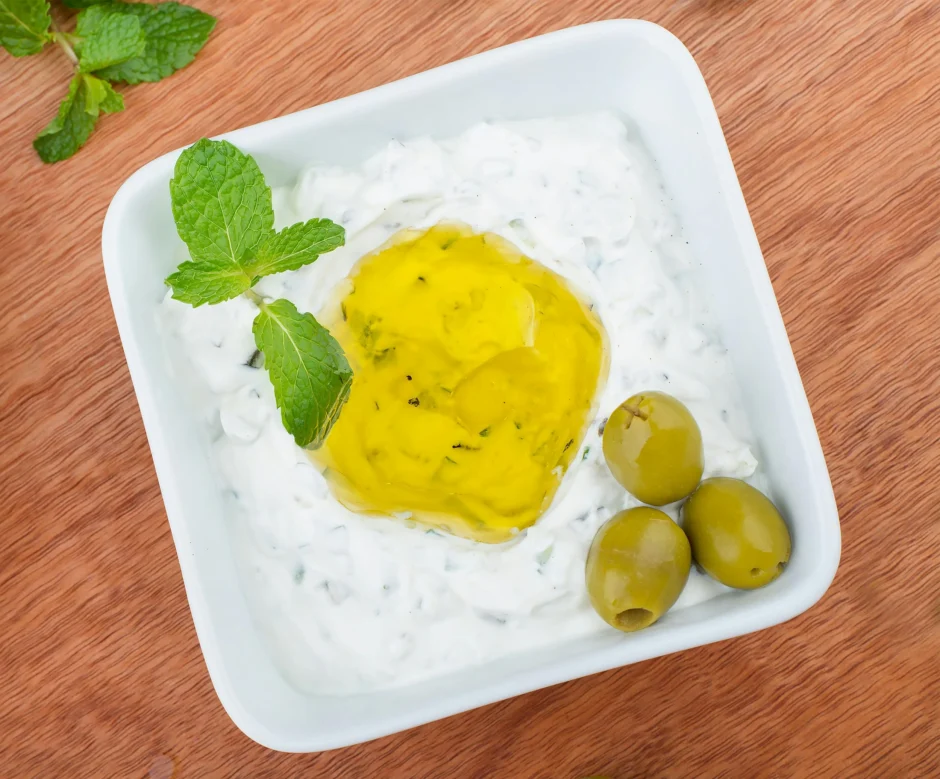
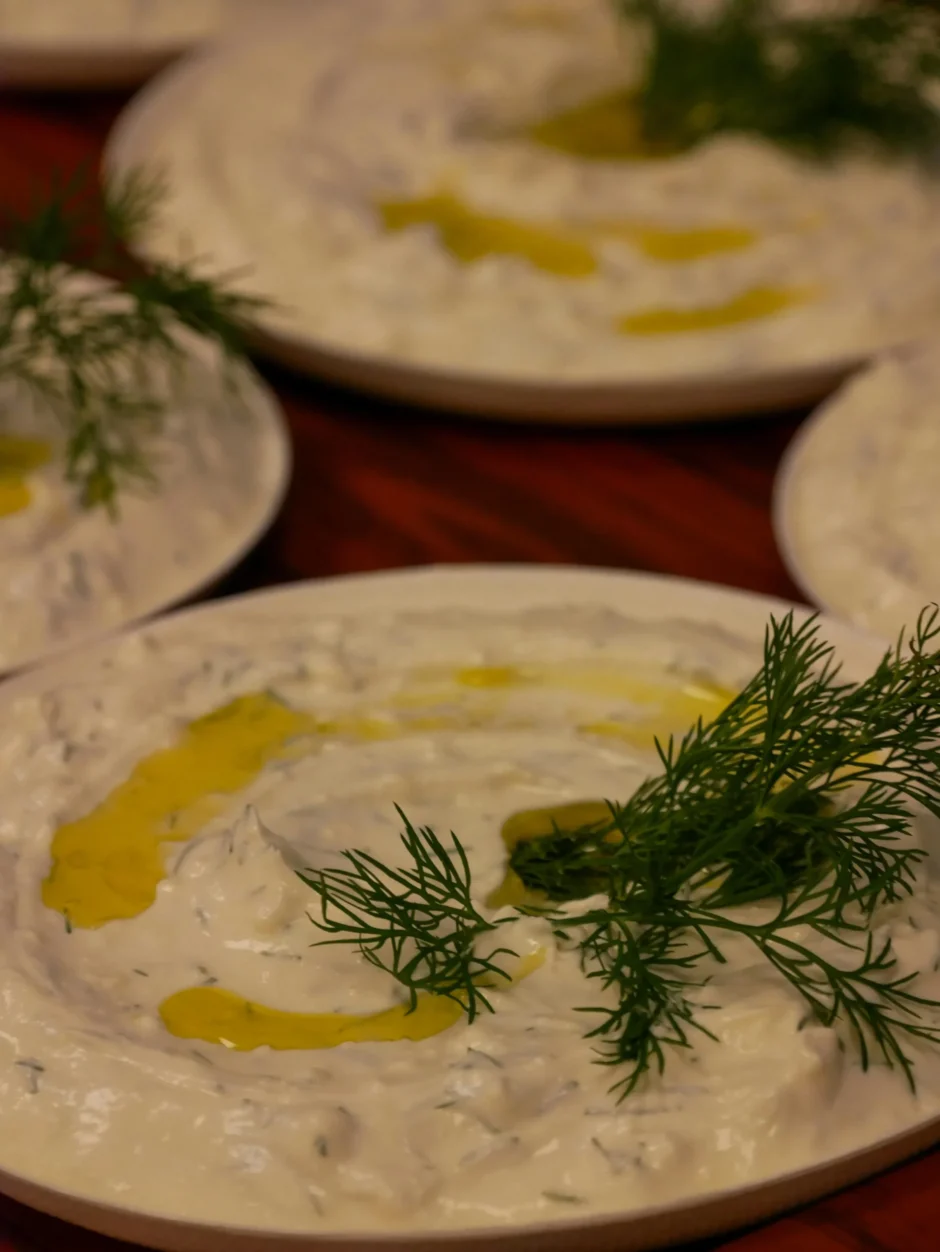
Tzatziki is a recipe made with Greek yogurt, diced cucumber, minced garlic cloves, olive oil, vinegar, mint (or Dill), and seasoned with salt and pepper.
Visually, it’s a sauce that can be eaten with bread or directly with cucumbers, and it’s even added to gyros.
As for the taste, you can really taste the cucumber, and the mix of ingredients goes together really well, and what’s amazing is that it can be eaten with so many things.
2- Pita Gyros (Πίτα γύρος)
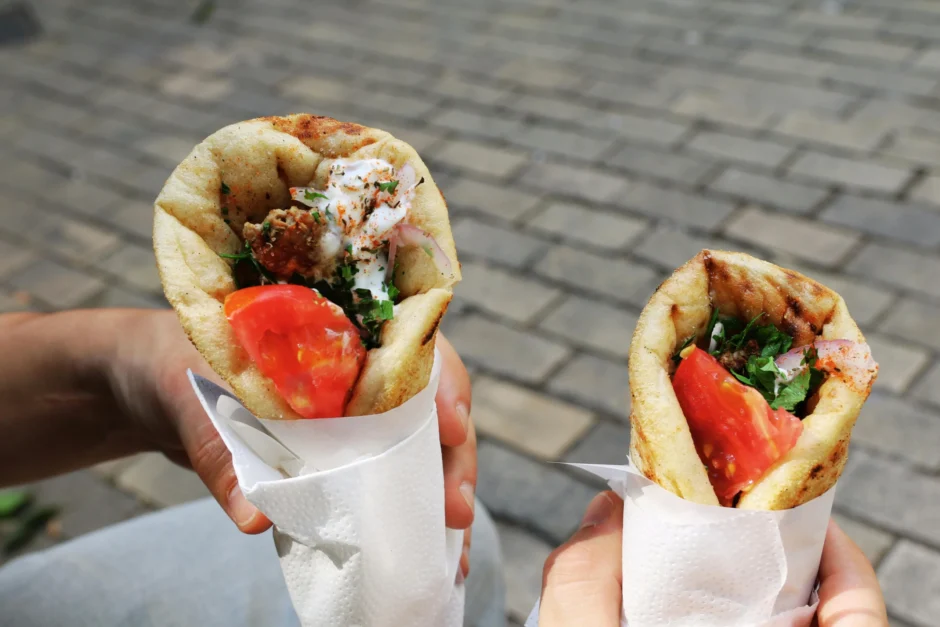
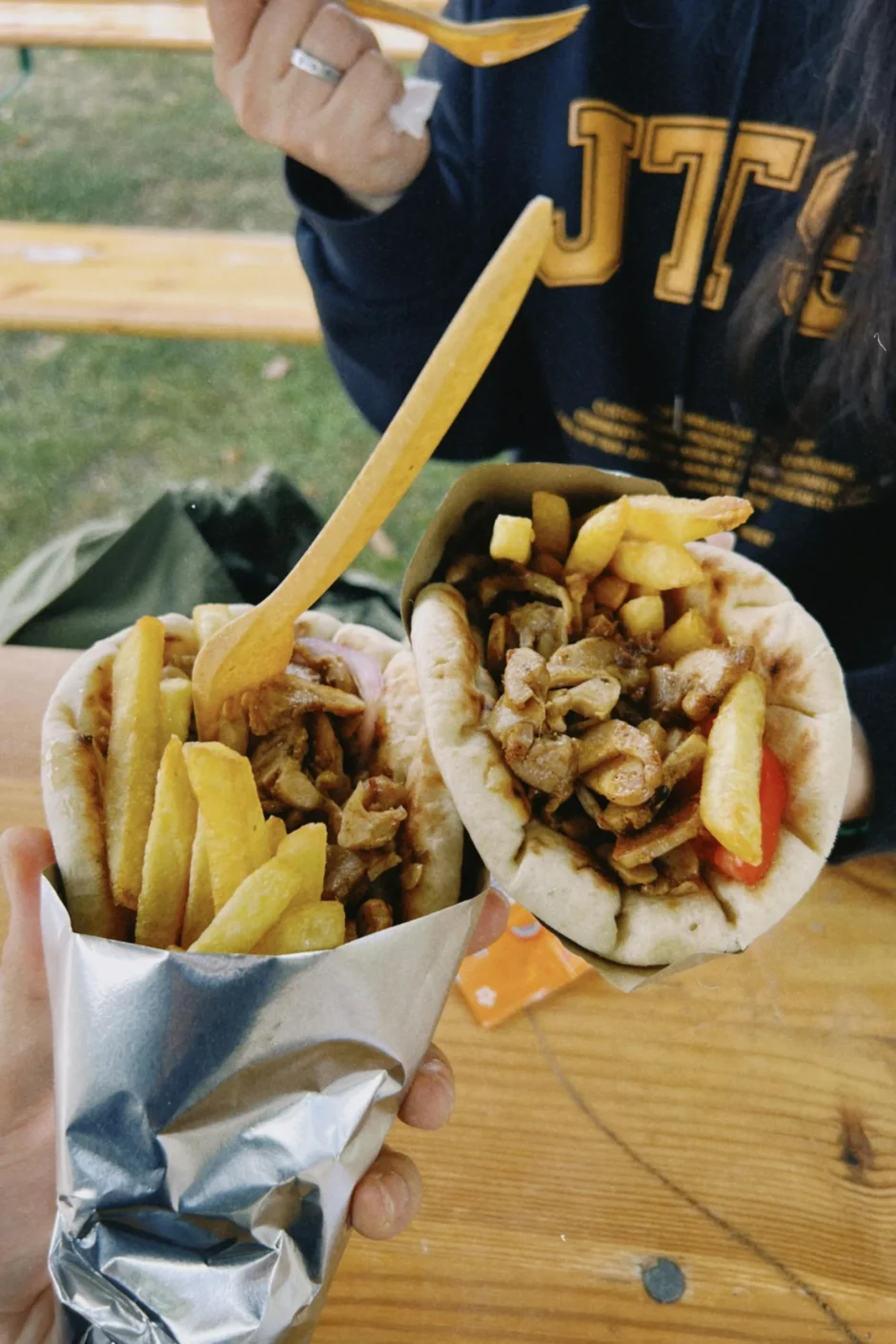
Pita Gyros is like Kebab but the recipe is different. The Pita Gyros is made from Pita, marinated chicken (or pork), tzatziki, tomato, onion, fries, coriander, chili (optional) and ketchup and mayonnaise on top (optional).
Visually it is very well presented, you can clearly see the ingredients and it makes you really want to eat it. In terms of flavor, there is an explosion of taste with the spices, the meat, the other ingredients, and especially the Tzatziki which changes everything to make it unique.
3- Moussaka (Μουσακάς)
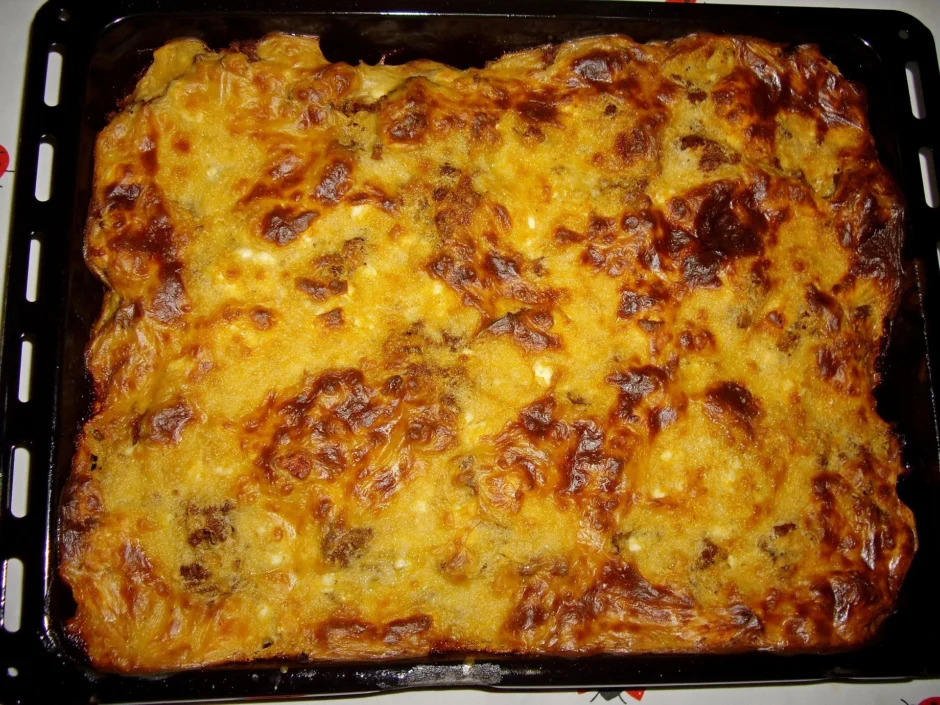
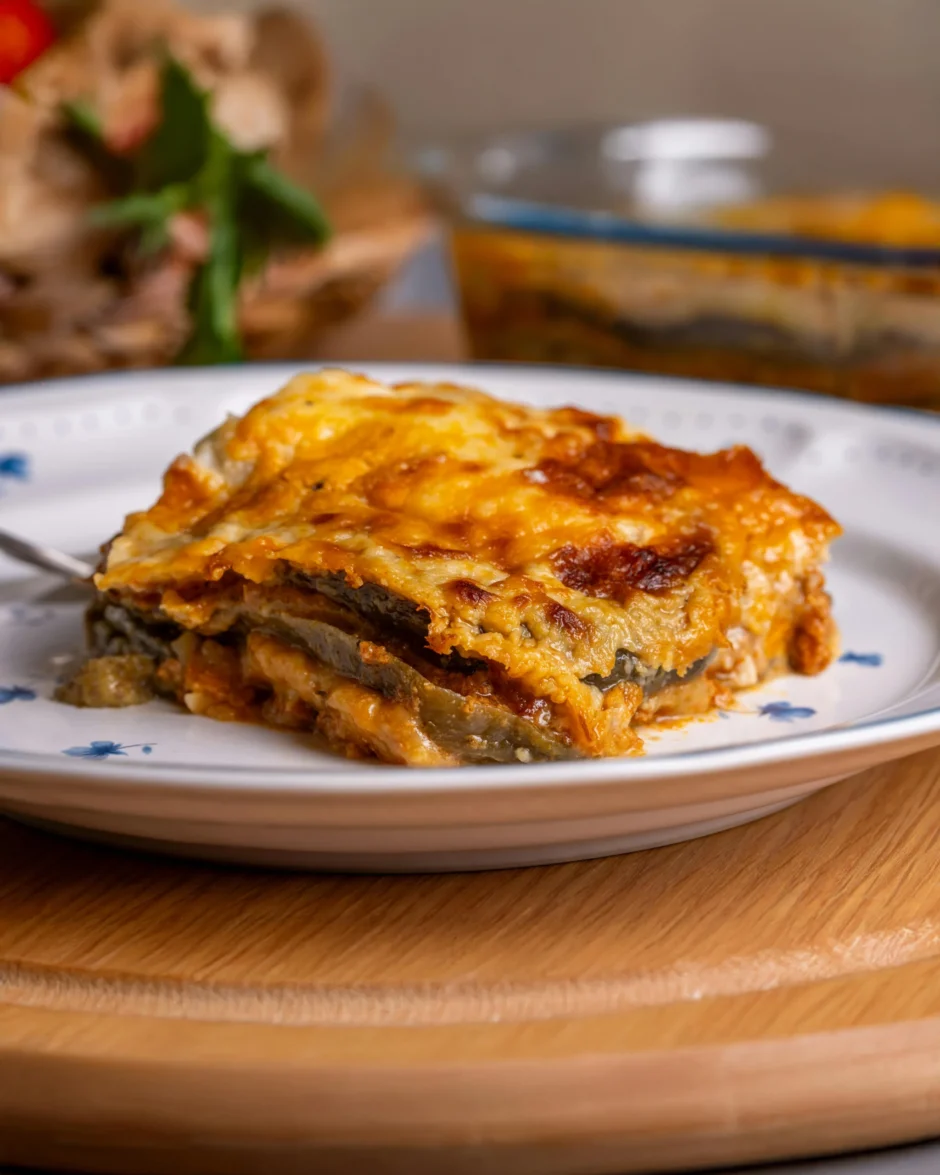
Moussaka is a flavorful dish where eggplant, ground beef, tomato sauce, potatoes, onions, small cloves of garlic, a bit of cinnamon, olive oil, dried oregano, and a nice béchamel on top are used.
Visually, it looks a lot like lasagna, but the taste is completely different; the tomato sauce goes very well with the potatoes and eggplants, and the spices enhance the flavor even more.
4- Souvlaki (Σουβλάκι)
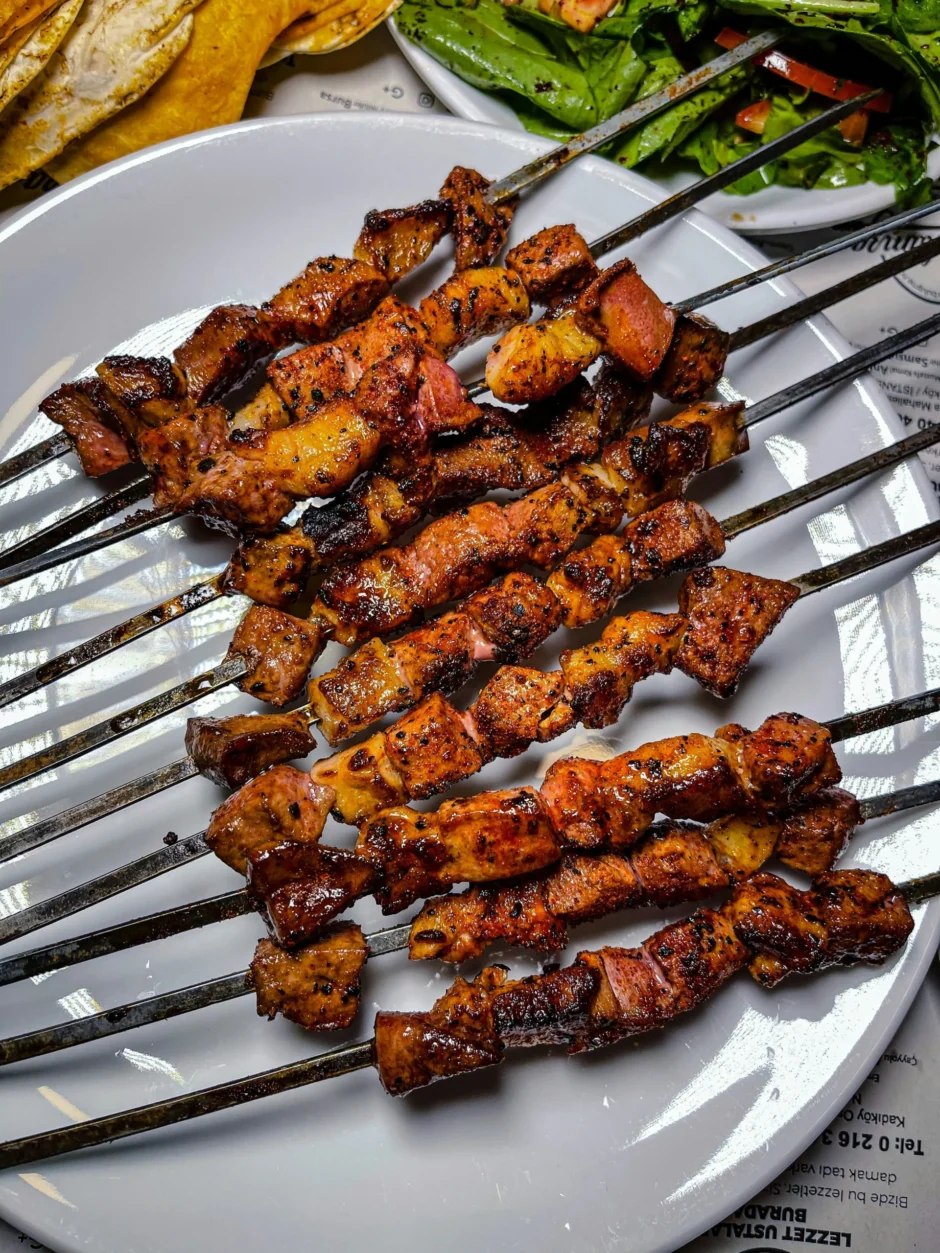
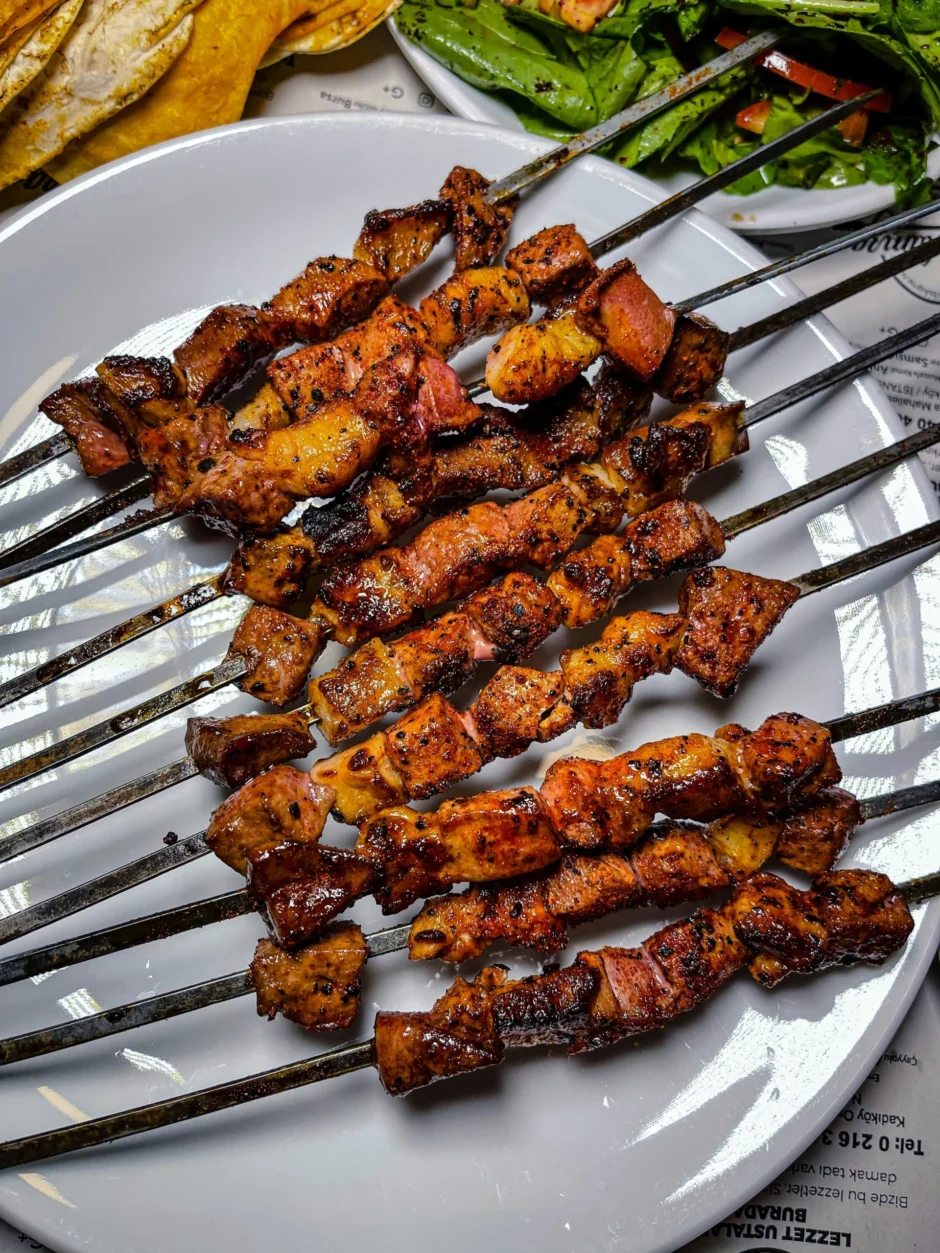
Souvlaki is a very delicious meat skewer that can be eaten in different ways: it can be marinated chicken or pork (a bit like the meat used for gyros), and it’s also frequently eaten on skewers or added to the pita filling.
However, the marinade used is quite different from the one used for gyros, and it’s very often cooked on a barbecue or griddle.
The marinade adds a lot of flavor, and it’s often served with grilled vegetables to make it even better, or even with tzatziki.
5- Soutzoukakia (Σουτζουκάκια)
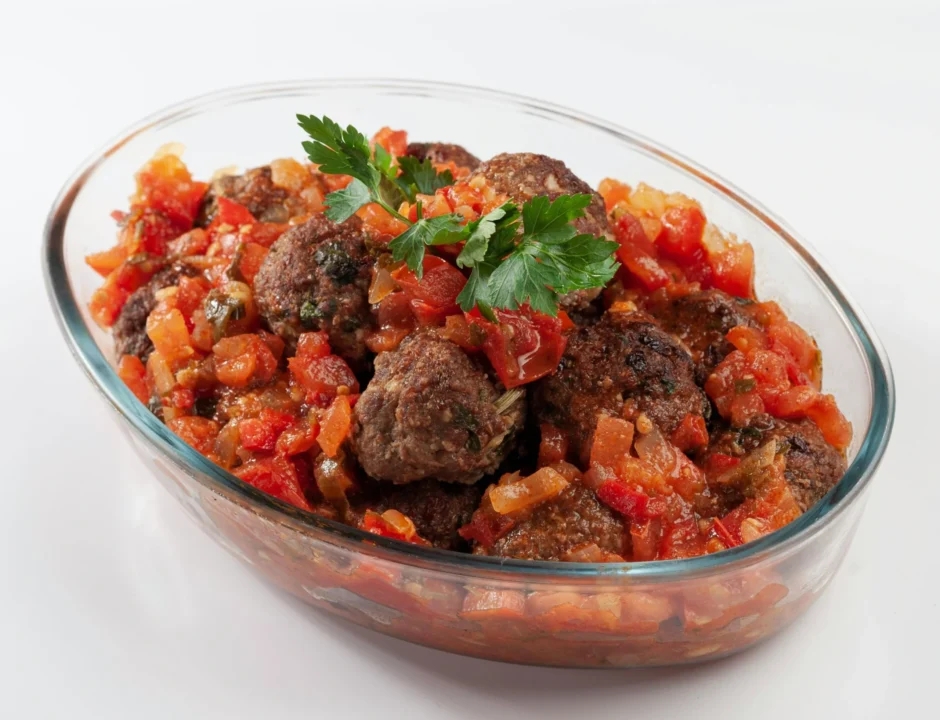
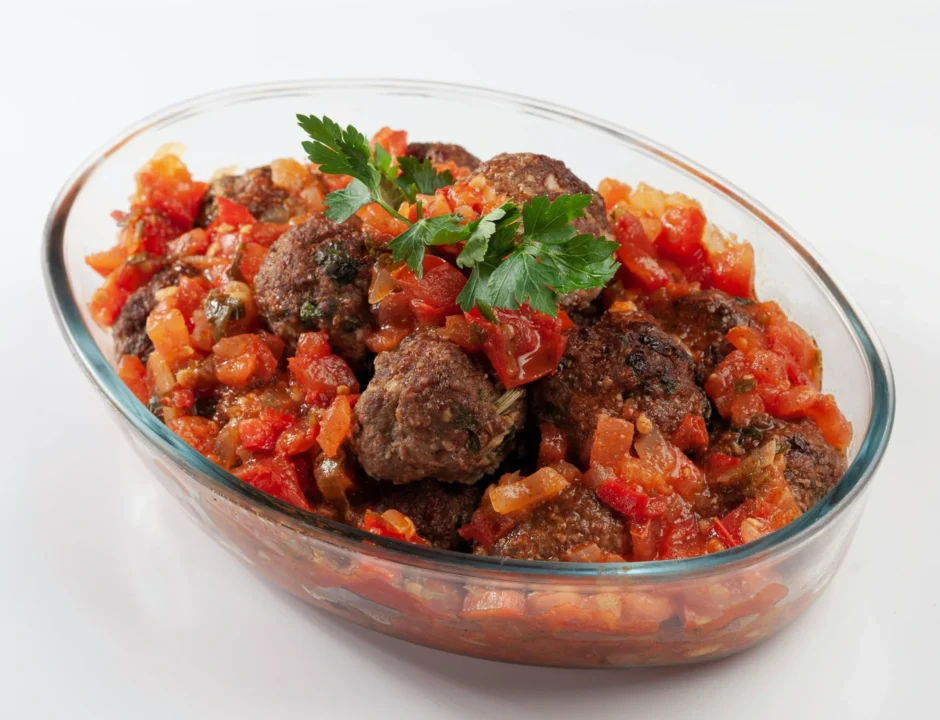
Soutzoukakia are meatballs made with either beef or a mixture of beef, eggs, stale bread (a good way to avoid wasting bread), garlic, cumin, thyme, oregano, olive oil, salt and pepper for seasoning, and finished with tomato sauce.
Visually, they are very similar to Bolognese sauce, and you can eat starchy foods (rice, potatoes) with them. However, the taste is quite different; it’s very spicy and rather simple to eat.
6- Tarama (Ταράμα)
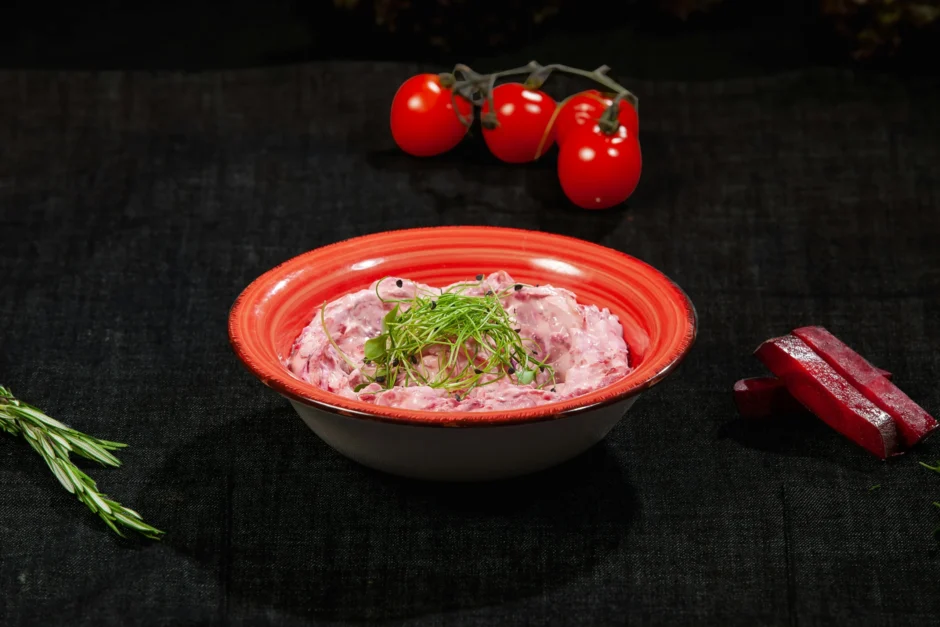
Tarama is a fish roe-based spread that is very often served as a dip. It consists of cod roe, preferably smoked or salted, crustless slices of white bread, olive oil, a little lemon juice, a small white onion, a little water or garlic to soften the bread, and white pepper.
Its appearance is quite distinctive; it can be either white or pink, which might make you want to try it. As for the taste, it’s very good, but in my opinion, not many people like tarama.
7- Gemista (Γεμιστά)
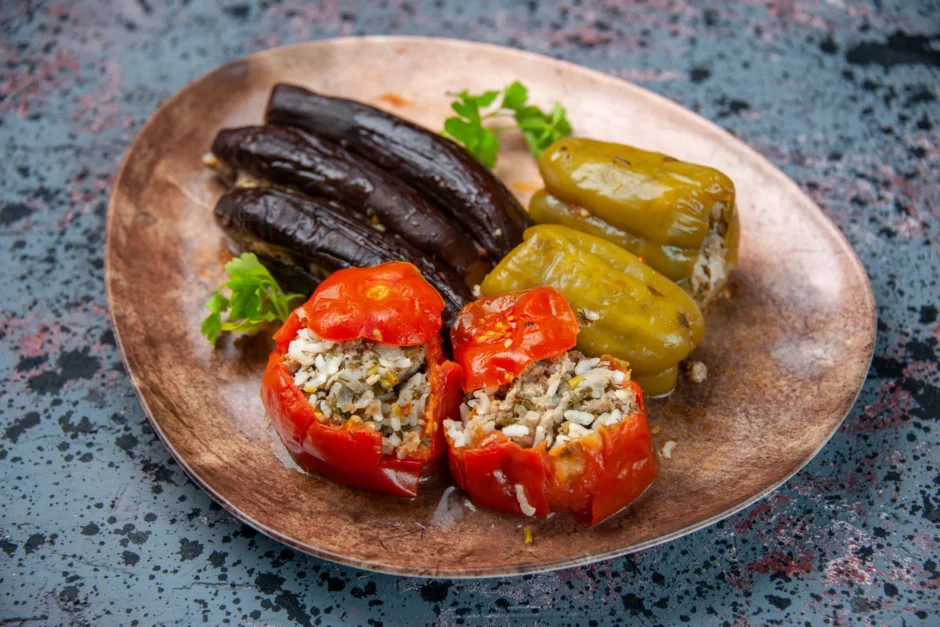
Gemista are vegetables stuffed with rice or minced meat. The vegetables used are tomatoes, zucchini, eggplant, or bell peppers, and the rice is served with olive oil and fresh herbs such as parsley, mint, or dill.
Visually, I think they’re similar to stuffed tomatoes but without the filling. They’re baked in the oven just like stuffed tomatoes, but in this case the filling can be other vegetables.
In terms of flavor, they’re delicious. The most distinctive feature is the eggplant and bell peppers, which have a slightly bitter taste if they aren’t seasoned enough.
8- Koulouri (Κουλούρι)

Koulouri is a ring-shaped bread with sesame seeds. The recipe is almost the same as regular bread, except that the shape is completely different, and the of sesame seeds makes it even better.
It can be eaten with tzatziki or as a snack, and it’s available everywhere in Greece for a very reasonable price.
The second part is the origin of the dishes
1- Origin of Tzaziki (τζατζίκι)
This sauce originates from Greek cuisine. Its name comes from the Greek word “tzatziki” (pronounced “tzatziki”), which refers to the sauce itself. It is a staple of traditional Greek cuisine and is widely consumed throughout Greece and other Mediterranean countries.
The recipe has a long history, dating back to ancient Greece. The combination of ingredients, It was prized for its refreshing properties, delicious taste, and health benefits.
This Greek cucumber sauce has become popular outside of Greece thanks to Mediterranean cuisine, where it is often paired with dishes like souvlaki, gyros, and meze. Over the years, it has gained popularity in many countries around the world due to its unique flavor and versatility. It is often served as a condiment, dip or accompaniment to a wide variety of dishes.
2- Origin of Gyros (Πίτα γύρος)
Gyros (Modern Greek: γύρος / yýros, from Ancient Greek: γῦρος / gŷros, meaning “ring” or “circle”) is a derivative of the Turkish döner kebab. The technique of cooking meat on a vertical spit was developed in the 19th century in the city of Bursa, Turkey. This dish, known as döner kebab (literally “rotating grilled meat”), was introduced to Greece after World War II by Greek immigrants from Anatolia, following population exchanges.
The first gyros are believed to have been served in the 1950s in Piraeus, introduced by a cook from Istanbul of Greek origin. A distinct variant, often made with pork and served with tzatziki sauce, emerged in Thessaloniki, particularly in the Toumba district. In the 1970s, the gyros gained popularity in Athens and in American cities with a strong Greek diaspora, such as Chicago and New York.
3- Origin of Moussaka (Μουσακάς)
Moussaka has its roots in the Ottoman Empire and the Middle East, with Arabic influences, notably the term “musaqqa’a,” meaning “fresh” or “moist” in Egyptian Arabic, which originally referred to a cold cooked vegetable dish. The word was adopted by Ottoman Turkish and spread throughout the Balkans before reaching Greece and Western Europe.
The Greek moussaka as we know it today was codified by the Greek chef Nikolaos Tselementes in the early 20th century, around 1910-1920. He introduced béchamel sauce and structured the dish into layers of minced meat, eggplant, and tomatoes, sometimes with potatoes, creating a richer, more gratineed version. This adaptation transformed moussaka into a Greek culinary icon, widely enjoyed internationally.
4- Origin of Souvlaki (Σουβλάκι)
Souvlaki is an ancient dish dating back to antiquity. It was notably consumed during festivals in honor of Hephaestus, the god of fire and the forge.
However, it was in the 20th century that souvlaki, as we know it today, took shape in Greece. It has become a popular and essential dish in Greek cuisine.
It is difficult to determine with certainty who invented souvlaki, as this dish has been an integral part of Greek culture for centuries. Nevertheless, it can be said that the Greeks have mastered the art of using simple, high-quality ingredients to create this flavorful dish.
Souvlaki is often served with pita bread, grilled vegetables, and tzatziki sauce. It is enjoyed by many people around the world for its authentic taste and Mediterranean flavors.
5- Origin of Soutzoukakia (Σουτζουκάκια)
Soutzoukakia Smyrneika have their roots in the rich and complex history of Smyrna, now known as Izmir. This region, once a crossroads of Greek and Turkish cultures, saw the birth of this dish during the Ottoman Empire. Greek refugees fleeing the Turkish invasion in the early 20th century brought this iconic recipe with them. This is how these spiced dumplings became popular in Greece, particularly on the Aegean islands, where the climate and soil are perfectly suited to producing the dish’s typical ingredients.
Soutzoukakia are distinguished by their elongated shape and their unique blend of cumin and cinnamon, two spices that set them apart from other meat dishes like keftedes or the famous souvlaki. Traditionally, Greek families suggested serving soutzoukakia at gatherings, where every bite evokes the legendary hospitality of Greece. Feeling the warmth of this dish transports you to those moments of sharing where laughter and stories mingle with aromatic vapors.
6- Origin of Tarama (Ταράμα)
Tarama has its roots in Greek and Turkish cuisine, and it is also found in Ottoman Jewish cuisine. The word “tarama” comes from the Turkish word taramak, which refers to the act of extracting fish roe, and in Greek, it literally means “salted fish roe.” Since ancient times, the inhabitants of the Mediterranean basin have consumed fish roe, particularly in the form of caviar, which is the ancestor of tarama.
In Greece, tarama is especially popular during Lent and on “Clean Monday” (Καθαρά Δευτέρα), marking the beginning of the 40-day fast. It is then served as taramosalata, a spread made from tarama, which is part of festive culinary traditions.
7- Origin of Gemista (Γεμιστά)
Gemista, or yemista, is a traditional Mediterranean dish rooted in Greek tradition. Its origins date back centuries, influenced by the diverse cuisines that have shaped Greece and its culinary customs. Stuffed vegetable dishes are found throughout the Mediterranean region, each country adapting them to its own local flavors and ingredients. In Greece, gemista represents summer, when vegetables are at their peak of ripeness, bursting with sunshine and flavor. This dish is not only delicious but also very nutritious, thanks to the combination of vegetables and rice. Gemista has long been a staple at family feasts and a clever way to utilize surplus vegetables from gardens. This phenomenon of the transmission of skills and recipes reminds us how vibrant and dynamic cuisine is, while remaining deeply connected to identity and family histories.
8- Origin of Koulouri (Κουλούρι)
Koulouri, or simit in Turkish, is a ring-shaped bread sprinkled with sesame seeds, often eaten for breakfast or as a snack. It is particularly popular in Greece and Turkey. The name “koulouri” is often associated with Thessaloniki, where it was likely introduced by Greek refugees from Asia Minor. This bread has evolved over time, with variations such as chocolate koulouri, raisin koulouri, or heart-shaped koulouri. Koulouri is also a symbol of Greek urban life, sold by street vendors and deeply ingrained in the country’s eating habits.
For finish the third part it’s a personal Top 8 of the most dishes
Top 8 Gemista (Γεμιστά)
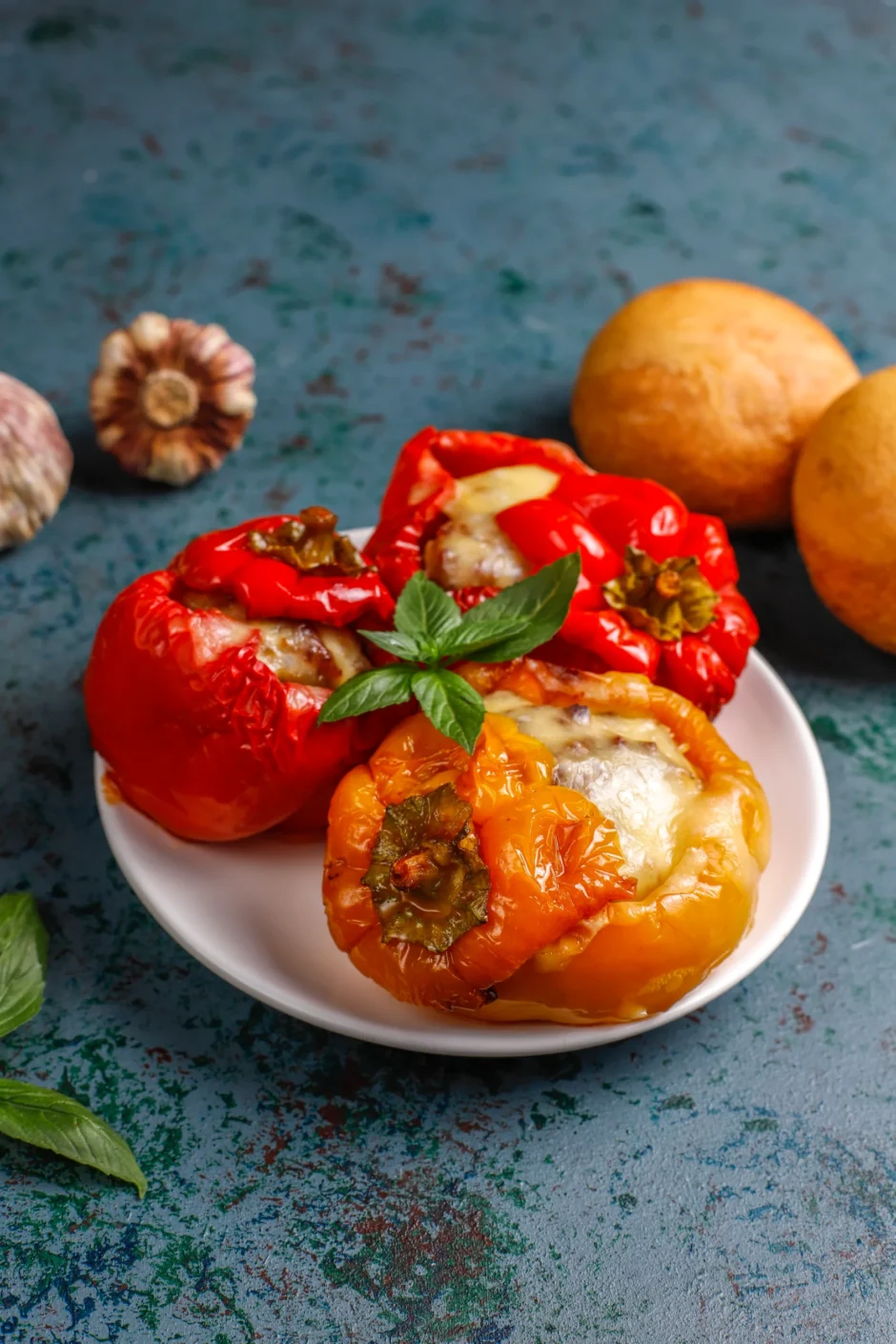
Top 7: Tarama (Ταράμα)

Top 6: Koulouri (Κουλούρι)
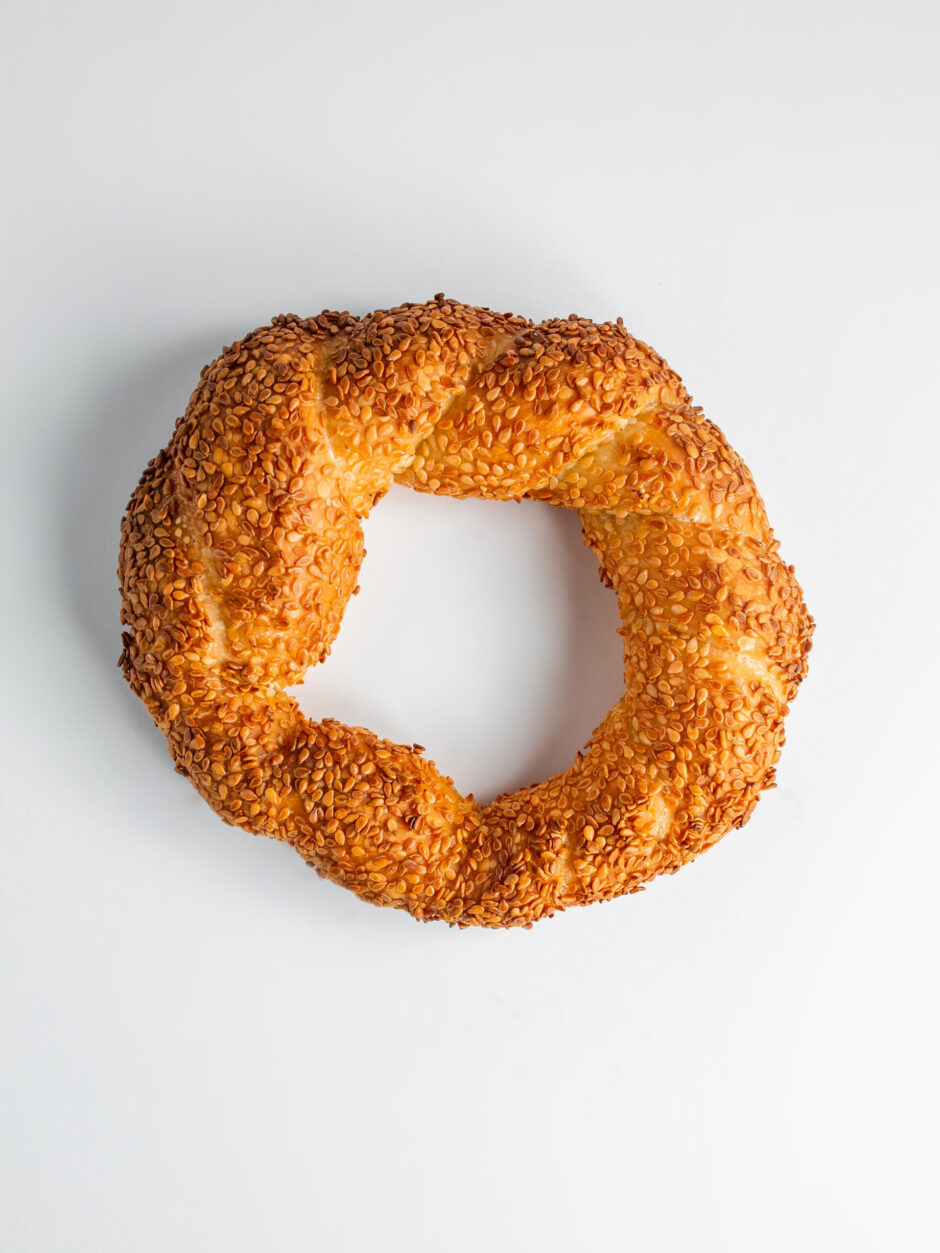
Top 5: Soutzoukakia (Σουτζουκάκια)
Top 4: Tzaziki (τζατζίκι)
Top 3: Souvlaki (Σουβλάκι)
Top 2: Moussaka (Μουσακάς)
Top 1: Pita Gyros (Πίτα γύρος)