

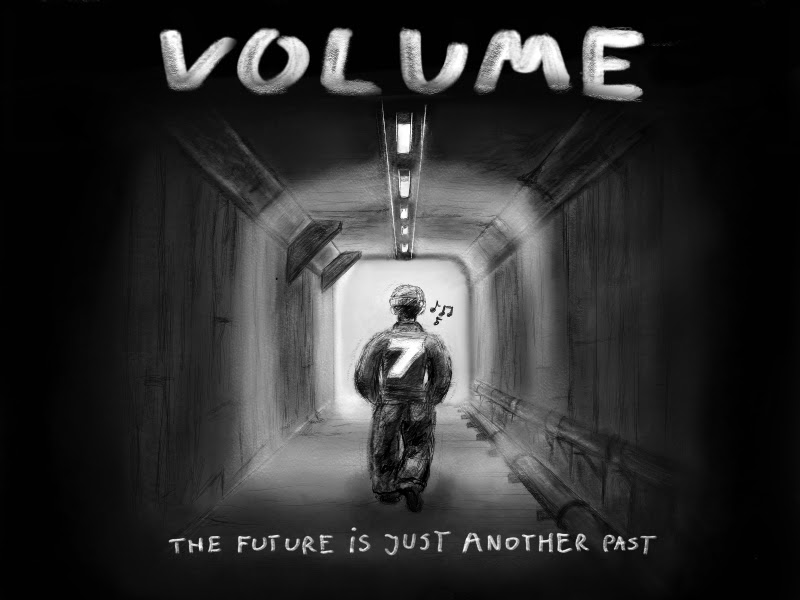
Volume 7
by Mateusz Rostkowski
A rabbit hole of present human issues, happening under the layer of science fiction. The dark and thrilling style of Volume 7 can almost take you into another dimension of today’s world. Directed by Panos Pappas & Despoina Charalampous, the movie feels like a nightmare you cannot wake up from. You end up in an endless time loop of human misery and disguise, following it along with the pointless life of prisoners in a gigantic “Ant nest”.
The story takes place in a building cut off from the rest of the world. It is inhabited by people trying to preserve as much knowledge as possible, fighting for survival in a world losing its human qualities. Suddenly, a catalyst appears — Nemon (Kostis Mpountas). He appears at various stages of the film, unchanged. With his existence, we observe the passing life of Lara (Stela Fyrogeni) and Dione (Kristel Kaperoni). The portrayal of Lara’s fleeting life shows us different stages of a woman’s life and her changing understanding of the world.
Personally, I was deeply touched by the film’s depth. It made me think that everything is in vain, but there’s hope, and it’s up to us what we decide. The science fiction blends beautifully with the societal issues it raises. The film shows how society keeps returning to old values, believing they can guide us toward a better future. At the same time, the story presents an endless time loop in which progress and decline coexist: technology keeps pushing humanity forward, yet people seem to lose their human qualities. The entire plot becomes a metaphor for the present, a gray, bleak reality we are forced to endure. The film raises many questions to which we haven’t found answers – but should we?
The city lying beneath the creation of VFX effects builds a brilliant, overwhelming feeling that conveys the story’s atmosphere. Dry, uncomfortable, and radiating with a sense of hopelessness. Black-and-white, highlighting extreme contrasts between the people inhabiting it. Full of hunger, both physical and mental, in search of a better world.
Despite the rough effect that accompanies the film’s style, there is also humor, though absurd, and the film generally requires focus to understand its meaning. A prime example is the fact that the escape plan involved ropes made of corn. One could say: Perfect idea in times of great hunger.
In my view, the film doesn’t place you in a position where it is clear who is right; instead, you choose your side through what you feel. Despite the chaos, there is a sense of calm and a deeper connection with our own lives. giving comfort in confusion, and that is what I appreciate most in this creation. I highly recommend it!


El camino
by Emma Donati
When tenderness infiltrates inside a machista reality
During my first days as a young volunteer in Thessaloniki I had the chance to get a taste of the richness and dynamism that the Thessaloniki International Film Festival, this year at its 66th edition, brings to the city.
The variety of the cultural offers, combined with the marvelous scenery of the city, was a pleasant surprise and a warm welcome.
Intrigued by the opportunity to listen to the director’s explanations, I invited a friend to see: En el Camino, also known as “On the Road”, winner of the prize Orizzonti at the Venice Film Festival 2025.
This film is written and directed by David Pablos, a Mexican author and filmmaker, already praised for his 2015 film Las Elegidas. Through his cinematography we are reeled in the social issues of Mexico, from underage prostitution to the dangerous existences of those who live in the Cartel area.
En el Camino is set in the desolate land of the Mexican highways. It focuses on Veneno, a young boy who lingers around diners and parking spots waiting for truck drivers to stop, in order to sell drugs, or his body, to them hoping to receive a ride in exchange.
At first his past remains unclear, but we can immediately pick up a sense of uneasiness and urge from him.
The director is masterful in showing us the characteristics of a raw and cruel world, a place for desperados (hopeless people), where you don’t have the privilege to feel safe.
It’s exactly in a place like this that Muñeco arrives, a married truck driver, addicted to drugs and kept away from his kids by the guilt of being a bad father.
Muñeco accepts to share a long ride with the boy, but only at one condition: they are going to sell Veneno’s drugs together, stopping by the spots Muñeco knows best, splitting the money.
Muñeco doesn’t seem interested in the boy whatsoever, maybe moved by pity or the longing feeling of his family, he plays a mentor role for a while.
During the evolution of the film we watch their bond grow, day by day, with a hint of warmth and complicity developing between them.
One night, after smoking crack together, they end up having their first sexual approach, which will lead to confusion and turmoil for the both of them.
At one point Veneno’s past reaches him, he has a debt which has to be paid, and he cannot keep running away, especially because, now, Muñeco is involved too.
What will happen next…?
Sorry! I won’t spoil the rest of the film for you, but I would like to delve into the clashing contrasts En el Camino is full of, treasuring the add-ons made by director David Pablos.
The context
Pablos’ cinematic vision depicts with extreme realism and sharpness the truck driving reality in Mexico. To express this roughness at its best, the film stars only one professional actor, Muñeco, while the others characters we see on screen are inexperienced people casted specifically for this film.
From landscapes to scenography, from the dialogues, to the lighting selection, everything underlines this sentiment of cold abandonment, implying, consequentially, an uncapability in creating any sort of relationship without the use of violence, monetary exchange or mere sexual interactions.
In a machista world where you exist just thanks to what you can offer, you are forced to become a product, an object, selling yourself to the best bidder. That’s the role of Veneno in this society: he is a profitable prey who knows how to engage in the trading dynamic.
If we analyze the context, it appears impossible to find just a drop of genuine care, at least until Muñeco arrives on the scene (even if at first he’s moved more by the addiction than by pity).
The tenderness’ breach
The film sparks a discussion about how masculinity is perceived at its extreme, and how a rigid set of social norms can be turned over by something simple and natural like a sweet glance, or a hug. It reveals that tenderness survives in each and one of us, even when we are obliged to comply in a constricting world. Harshness merges with emotional depth, explicit intensity with loveliness.
The stigma of softness in the machista structure finds its root in the concept of “feminine” actions and behaviours or at least in what, according to most people’s perception, belongs to the women’s social expectations.
Exposing “feminine” traits in an ultra masculine reality is seen as treasonous, especially if you are a man, even worse if you involve other men in your misconduct. When you exit the rigid game of social norms, you are seen as a dangerous threat.
That is even more ridiculous if we think that what is scary for those, who have internalized this cultural structure, is usually vulnerability and tenderness, something so distant from what we would call menacing.
The actors’ performances were truly engaging, by building a slow, but steady, bond between the two characters, each scene more aware of the feelings and the complexity of this ambiguous relationship. In particular it was heartwarming to see the gradual acceptance of their need of closeness and vulnerability, allowing themselves to exit the norms in order to dive in intimacy.
In short, the crucial knot of this whole narrative process is showing that compassion and sensitivity are powerful means through which we, as individuals, can divert an entire system, based on objectification, rigidity and cruelty; taking up space with kindness instead of brutality.
Therefore as human beings we embody powerful, and alternative, tools, so…
Why not make use of them?

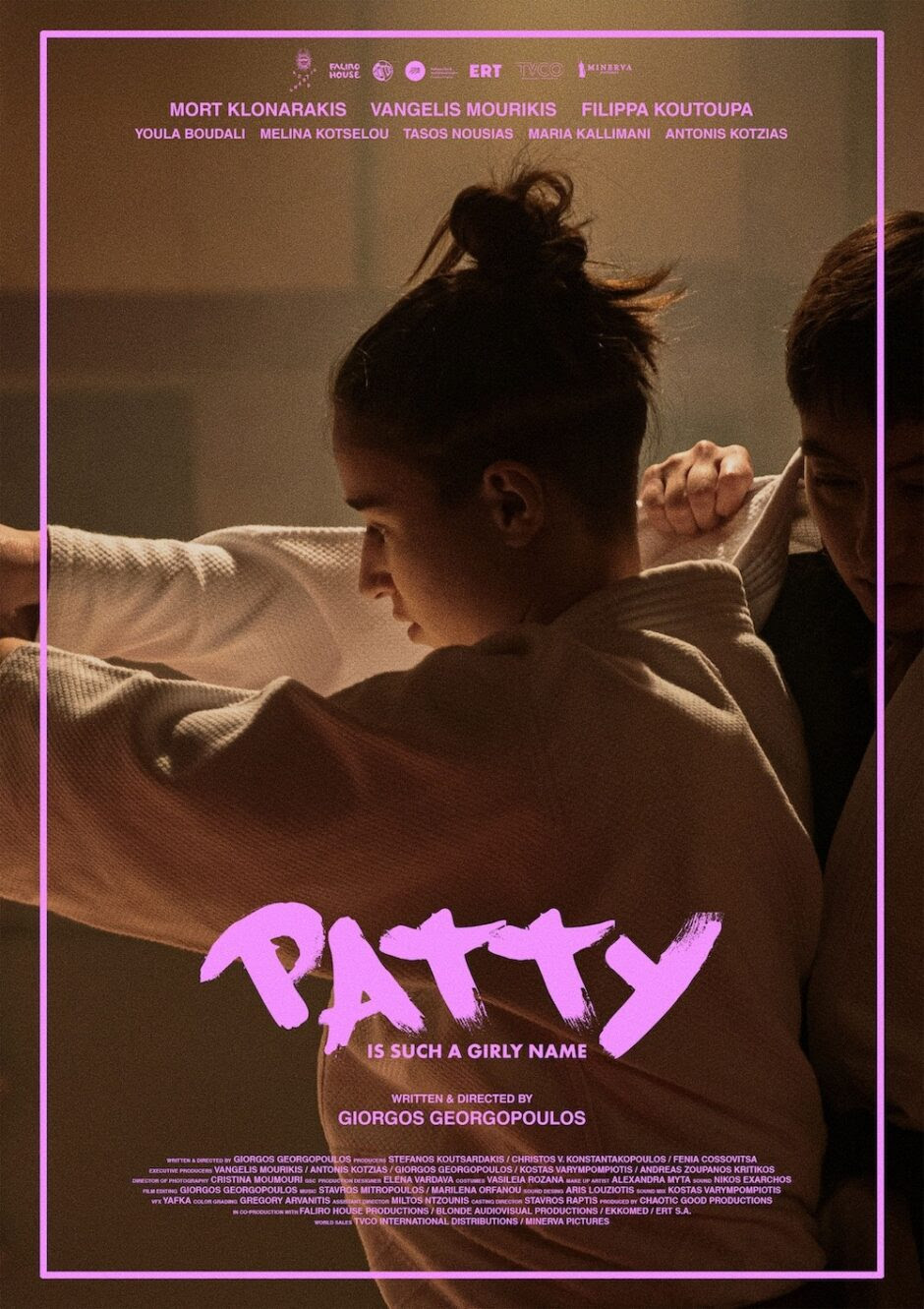
“Patty is such a girly name”
by Kaiti Leivaditi
Summary: Daphni (nicknamed Patty), is an 18-year-old judo athlete from the remote island of Ikaria, Greece. Her talent and passion for the sport soon lead her to Athens and to the dojo of Sensei Yuri, a legendary yet mysterious coach. Adjusting to her new life proves difficult, as Daphne struggles to find her footing amid the exhausting training sessions with her demanding teacher, the competitive atmosphere of the dojo, the pace of the capital city and the unexpected love she discovers in Zoi, an Olympic judo champion and Yuri’s former student. A love that soon turns destructive, driving Daphni to the edge of ruin before confronting her with a major dilemma: return to the safety of home, or fight her way to the top.

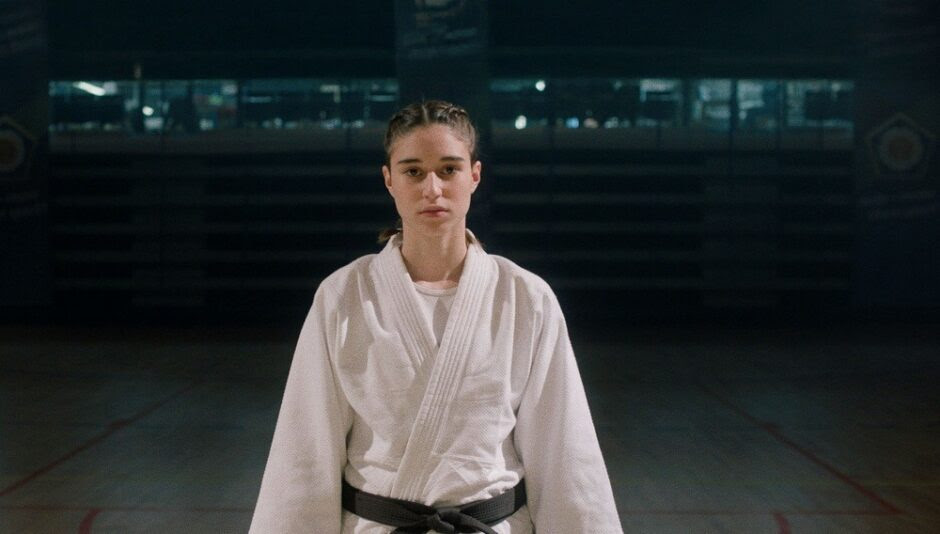
A wonderful coming-of-age story with outstanding performances, excellent storytelling flow and beautiful cinematography, along with well-written, natural dialogues and a vibe that truly speaks to the young audience of 2025. In the character of the beautifully drawn Daphne are crystallized all the awkward and painful–yet also all the fascinating and exhilarating- aspects of adolescence: the struggle of young people to discover who they are in a world that feels immense, unfamiliar, and sometimes hostile; the effort to define oneself within the collective and the shaping of identity away from family and the familiar environment; the awakening of sexual desire and discovery and the -inevitable- heartbreak of first love. Set against the grey urban landscape of Perama and the imposing port of Piraeus, Daphni-in a superb performance by Mort Klonarakis-embarks on a journey of self-discovery, often breaks down in tears, feels fear and anger, and keeps trying against all odds.
No character is one-dimensional or simplistic. The viewer may find themselves shifting often, sympathizing with a character in one scene and feeling repulsed by them in the next, as these authentically drawn, deeply human characters lower their defenses and reveal deliberately concealed aspects of themselves. Daphni is also Patty, a name everyone calls “too girly”, with all the connotations that entails. The enigmatic Sensei Yuri, portrayed with the expected mastery by the ever-impressive Vangelis Mourikis, is not merely a strict, goal-driven coach. He is a man who has tasted success, and knows all too well the dangers that lurk within it when arrogance prevails. He names his newly founded dojo “Icarus”, as a constant reminder that those who fly too close to the sun risk a sudden and violent fall to the ground.

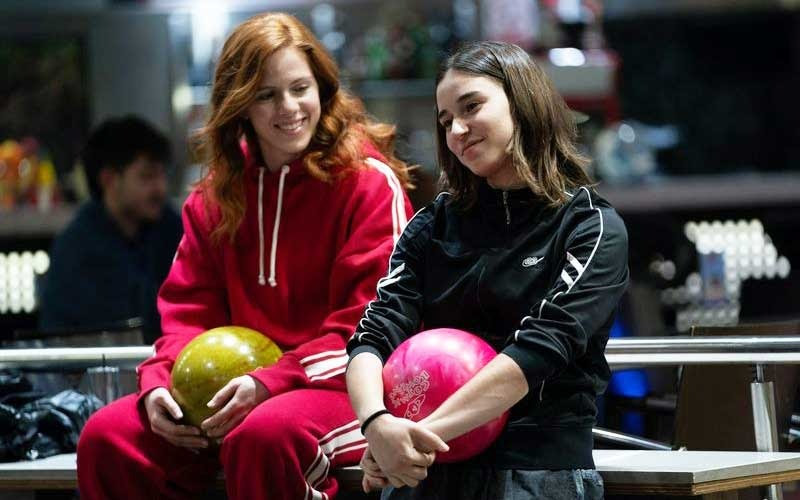
Stella, an athlete who at first sees the newcomer Daphni as a threat within the dojo, eventually stands by her side and, against her own personal interest, tries to keep her anchored to the sport, unwilling to watch her walk away from a career that could be truly extraordinary. Even Ioulia, Yuri’s seemingly cold and detached assistant, carries her own silent trauma.A survivor of sexual abuse by her first coach, another victim of the manipulative dynamic imposed by the trainer on the athlete: a dark reality that remained carefully hidden for years within the world of sports federations, only coming to light in Greece thanks to the brave disclosure of Olympic champion Sofia Mpekatorou and the powerful wave of change it unleashed.
Overall, “Patty” is a beautiful, realistic story of growing up, set against the backdrop of competitive sports and the demands they entail. Daphni, fragile yet resolute, determined to leave the safe haven of her mother’s and grandmother’s care in Ikaria and settle in the impersonal city of Athens, yet still holding on to the childish habit of sticking chewed gum under tables, is a timeless, universal cinematic young heroine. She hesitantly begins to explore her sexual desire and orientation, only to later dive headlong into love with a fierce abandon. Even if Zoe’s “love” is selfish and manipulative, Daphni will despair and suffer only to regain her strength and flourish again because, for both love and sport, demand the same: fall, rise and rise again-and maybe stick a chewed gum on the hair of the girl that betrayed you.

Strange River – No Questions Asked?
“My love can‘t you see it‘s just the colour of the sea That‘s reflecting on you And me“ (The Fireman is Blue – Ryder The Eagle)
by Gwendolyn Knorr & Leonie Diehl
The 66th Thessaloniki International Film Festival screened the film “Strange River“. It is a coming-of-age drama directed by Jaume Claret Muxart in his debut film, and published this year. In his movie, he showcases a family on a long bicycle journey along the Danube to Germany. It especially explores the sexual awakening of the protagonist, teenager Dídac, as he comes across a mysterious boy during this vacation with his family. The film’s visual approach stands out. Long water and nature shots, shifting light, and an observant camera perspective create a strong space while giving the characters time to breathe. The cinematography is phenomenal and elevates the drama while capturing the family‘s dynamics.
As a whole, the film is calm but still explores growth and belonging. Before the screening started, Jaume Claret Muxart already shared a couple of thoughts on his movie. What was especially important to him was that we, the audience, do not try to answer all the questions that come up as we watch it. As the boundaries between reality and dream remained undefined throughout the whole storyline, we tried to keep his advice in mind. We sat back and let the feelings of nostalgia, loneliness, longing for adventure, and homesickness come without questioning them.
When the movie ended, one person asked for the song in the final scene. The protagonist shares his headphones with his little brother as the song is attracting more and more attention. It was actually suggested to the director by chance on Spotify. “The Fireman Is Blue“ by Ryder The Eagle stood out especially because it seemed to perfectly capture the essence of the movie. Outside of the cinema, we were even able to ask Jaume Claret Muxart about the inspiration for the movie, which actually turned out to be inspired by his own childhood vacations of biking along rivers.
As the Film Festival is situated right on the edge of the sea, we sat down looking over Thessaloniki’s waterfront and exchanged our thoughts on the movie. We dangled our feet above the surface, which formed the same waves as in the mesmerizing water scenes we had just been fortunate enough to watch.


